

The Business Impact of Customer Birthday Gifting: Why Brands That Remember, Win
The Business Impact of Customer Birthday Gifting: Why Brands That Remember, Win
Explore Birthday GiftingKey Takeaways
-
-
Customer birthday gifting delivers long-term relationship ROI, not just short-term sales uplift, by strengthening emotional loyalty and brand recall.
-
Personalized birthday gifts consistently outperform discounts because they create memorable, non-transactional brand moments.
-
Birthday gifting is one of the few customer touchpoints where brands can use personal data in a way customers genuinely appreciate.
-
When systemized through CRM and automation, birthday gifting becomes a scalable retention lever rather than a one-off gesture.
-
Brands that treat birthday gifting as relationship infrastructure see higher retention, engagement, and customer lifetime value over time.
-
Most brands talk about personalization. Very few actually practice it in moments that truly matter.
A customer’s birthday is one of those rare, emotionally charged moments where marketing stops feeling like marketing. When done right, birthday gifting isn’t about the gift at all. It’s about recognition, memory, and relationship equity. When done wrong, or skipped entirely, it becomes another missed opportunity buried under discount emails, automated notifications, and generic loyalty campaigns.
Today, forward-thinking companies are asking a sharper, more strategic question: what is the actual birthday gifting ROI? Not just in terms of immediate sales, but in loyalty, lifetime value, referrals, brand recall, and long-term relationship strength.
This is where customer birthday gifting quietly outperforms discounts, promo codes, and seasonal campaigns. A thoughtful birthday gift doesn’t compete on price. It competes on emotion. And emotion, as decades of behavioral research show, is what customers remember long after transactions fade.
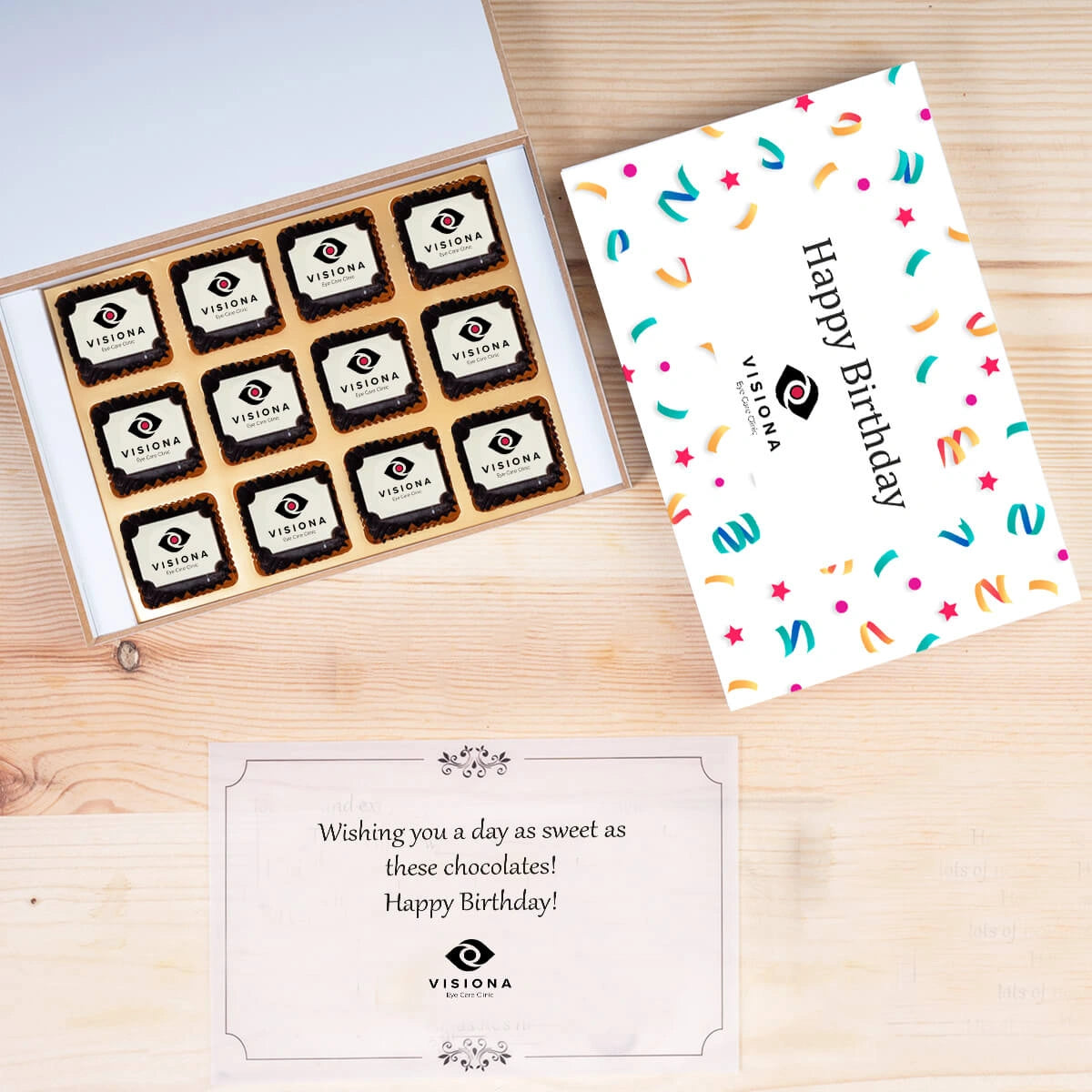
Brands using personalized gifting formats such as printed chocolates with names, messages, or photos are seeing birthdays transform from calendar reminders into genuine relationship milestones. You can see how this approach works in practice through a curated birthday gift for customer program designed specifically for long-term engagement rather than short-term conversion.
Build a gifting experience—combine logo chocolates with festive hampers for maximum impact. Read more →
Why Birthday Gifting Matters in Modern Customer Marketing
Customer marketing has changed dramatically. The era of mass emails, blanket discounts, and one-size-fits-all loyalty programs is steadily losing effectiveness. This shift is especially visible in B2B and relationship-driven industries, where trust, recall, and continuity matter more than impulse purchases.
Customers today expect brands to know them, not just sell to them. They expect recognition, relevance, and respect for their individuality.
Birthdays sit at a unique intersection of high emotional relevance, low competitive noise, and natural personalization opportunity. Unlike festivals, sale seasons, or promotional events, a birthday belongs to the customer, not the brand. That is precisely why birthday gifting works so well.
Research from Harvard Business Review highlights that emotionally connected customers are significantly more valuable than merely satisfied ones. Emotional connection leads to higher repeat purchases, lower churn, stronger advocacy, and deeper brand attachment. Birthday gifting taps directly into this emotional layer without feeling transactional or sales-driven.
In the Indian market in particular, birthdays carry strong cultural and emotional weight. They are moments of celebration, acknowledgment, and personal importance. A brand that remembers and celebrates a customer’s birthday signals warmth, attentiveness, and respect. These are qualities that money alone cannot buy.
Yet many companies still approach birthdays in one of three ways. They send a generic birthday email. They push a discount coupon. Or they do nothing at all.
This creates a growing gap between customer expectations and brand experience. That gap is where both opportunity and risk exist.
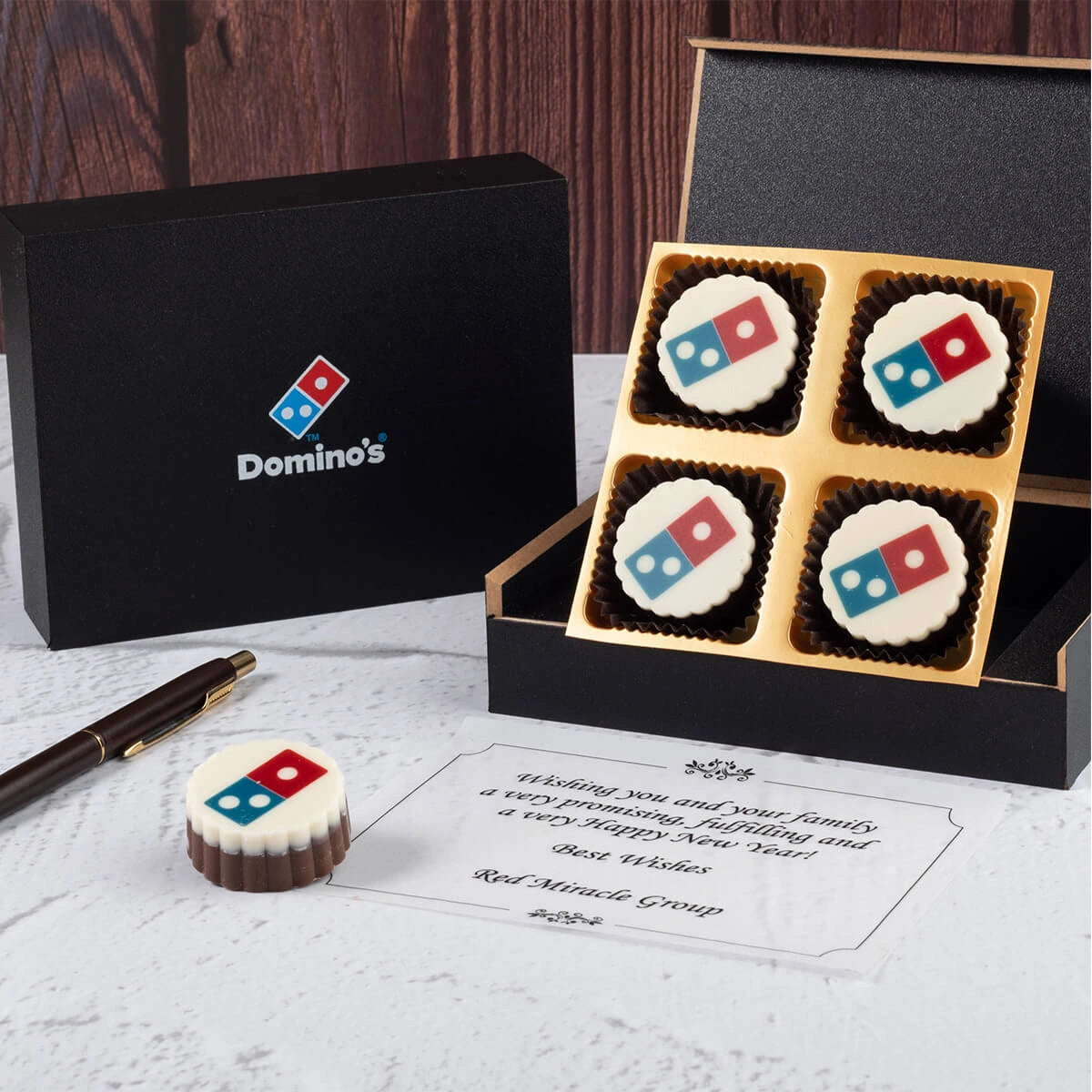
4 Piece Premium Client Gift Box
A compact yet elegant chocolate box designed for exclusive corporate gifting.
See CollectionThe Core Opportunity: From Forgotten Dates to Loyalty Flywheels
Most customer relationships do not end because of dissatisfaction. They fade because of indifference.
After onboarding is complete and the first few transactions are done, many brands slowly stop showing up in meaningful ways. Communication becomes sporadic, generic, or purely promotional. Over time, customers drift away without consciously deciding to leave.
Birthday gifting interrupts this silent decay.
One of the most powerful aspects of birthday gifting is that it is a non-sales touchpoint. Unlike promotions or campaigns, birthday gifts do not ask for anything in return. This psychological asymmetry builds trust and goodwill.
Neuroscience research shows that emotionally positive surprises are encoded more deeply in memory. A well-timed birthday gift becomes a mental bookmark for your brand. It stands out because it was unexpected, personal, and emotionally relevant.
Bain & Company’s research on customer retention, published in The Economics of E-Loyalty, demonstrates that even small improvements in retention can significantly boost profitability. Retained customers buy more often, cost less to serve, and are more likely to recommend the brand to others. Birthday gifting directly supports this retention flywheel.
Consider two brands. Brand A sends a 10 percent birthday discount by email. Brand B sends a personalized keepsake gift that arrives at the customer’s home or office. One is forgotten in minutes. The other stays visible for months.
This difference is the essence of birthday gifting ROI.
Key Pillars of High-Impact Customer Birthday Gifting
To generate real business impact, birthday gifting must be designed intentionally. The following pillars separate high-performing gifting programs from forgettable gestures.
Personalization beyond names is the first pillar. True personalization goes far beyond inserting a first name into an email subject line. High-impact birthday gifts often include the customer’s name on the gift itself, a thoughtful message, or even visual personalization.
Personalized physical gifts consistently outperform digital alternatives because they engage multiple senses. They can be seen, touched, shared, and remembered. This is why formats such as printed birthday chocolates tend to leave a stronger impression than digital greetings alone.
The second pillar is emotional value over monetary value. Research published by MIT Sloan Management Review in Why Emotional Rewards Outperform Financial Incentives shows that emotional rewards drive deeper loyalty than purely financial ones. A thoughtfully designed gift often creates more impact than a higher-value discount.
The third pillar is timing and surprise. Birthday gifts work best when they arrive on or just before the birthday, without advance announcements or redemption requirements. The goal is delight, not activation.
Automation plays an important role here, but only when paired with human intent. Systems explored in automated birthday gifting help brands scale without losing consistency, while still allowing personalization to shine.
The fourth pillar is brand recall through physical presence. A well-designed gift box placed on a desk or shared at home quietly reinforces brand presence long after the birthday has passed. Over time, these moments compound into familiarity and preference.
Finally, consistency matters more than one-off gestures. Birthday gifting delivers the strongest ROI when it becomes a system rather than a campaign. Consistency builds expectation, expectation builds trust, and trust builds loyalty.
Focus on gifts that strengthen engagement: personalized chocolates boost brand recall and retention. Read more →
Data, Research, and Case-Backed Proof: Does Birthday Gifting Really Deliver ROI?
A common concern among decision-makers is simple and reasonable. Birthday gifting sounds thoughtful, but how does it translate into measurable business impact?
The answer lies in understanding that birthday gifting delivers a different kind of return. It generates relationship ROI rather than immediate transactional ROI. This return compounds quietly across retention, repeat purchases, brand recall, referrals, and customer lifetime value.
Bain & Company’s research on loyalty economics, detailed in The Economics of E-Loyalty, shows that even modest improvements in customer retention can dramatically increase profitability. Retained customers buy more frequently, are less price-sensitive, and cost significantly less to serve over time.
Birthday gifting directly strengthens this retention loop because it reinforces emotional connection without asking for a transaction in return.
McKinsey reinforces this view in The Value of Getting Personalization Right, noting that customers respond more positively and remain more loyal when brands use personal data responsibly to create meaningful experiences. A birthday is one of the few personal data points customers expect brands to acknowledge.
Across industries, brands that shift from discount-led birthday emails to physical, personalized birthday gifts consistently report higher engagement in the weeks following the birthday. Customers reply more often, open more communication, and re-engage with the brand organically.
These patterns are visible across multiple real-world examples documented in birthday gifting case studies, where birthday gifting helped revive dormant relationships and strengthen active ones without increasing promotional pressure.
The takeaway is clear. Birthday gifting ROI does not always appear as a single line item. It appears as better customer behavior over time.
How to Measure Birthday Gifting ROI Without Overcomplicating It
Measuring birthday gifting ROI does not require complex attribution models or advanced analytics stacks. What it requires is clarity on the outcomes that actually matter.
The most effective brands evaluate birthday gifting using a combination of behavioral, engagement, and value-based indicators.
Retention lift is one of the simplest and most powerful metrics. Compare repeat purchase rates or churn rates between customers who receive birthday gifts and those who do not. Even a small improvement in retention can justify the entire program cost.
Post-birthday engagement is another useful indicator. Many brands track engagement in the 30 to 60 days following a birthday, including replies to emails, inbound inquiries, website visits, and account activity.
Birthday gifting also creates an opportunity to generate authentic feedback. When customers feel appreciated, they are more willing to share their experiences. Some brands gently encourage this through approaches discussed in reviews with birthday gifts.
Reactivation success is particularly relevant for inactive or low-engagement customers. Birthday gifting often outperforms discounts when the goal is to restart a conversation rather than push a sale. This approach is explored in depth in reactivate with birthday gifts.
Finally, many brands look at long-term customer lifetime value trends. Birthday gifting rarely causes an immediate spike in CLV, but over multiple cycles, gifted customers often show stronger value curves than control groups.
For teams that want a structured measurement framework, this detailed guide on birthday gifting ROI provides practical benchmarks and formulas.
Premium Corporate Gifts with Logo Chocolates
Make a lasting impression on clients and employees with personalized chocolate gift boxes that reflect your brand.
Explore NowPractical How-To: Building a Scalable Birthday Gifting Program
A successful birthday gifting program does not require excessive budgets or complexity. It requires thoughtful design and operational discipline.
The first step is segmentation. Not every customer requires the same level of gifting. Segment customers by value, relationship stage, or strategic importance. Even basic tiering significantly improves return on investment.
The second step is selecting gifts that feel thoughtful rather than promotional. High-performing birthday gifts are typically consumable, easy to enjoy, and emotionally resonant. Many brands draw inspiration from curated birthday gift box ideas that balance perceived value with simplicity.
The third step is getting the message right. A birthday gift without a thoughtful message loses much of its impact. Messages should be short, sincere, and free from sales language. Proven tone and structure guidance can be found in birthday gift message best practices.
The fourth step is automating the backend while humanizing the frontend. CRM-linked workflows ensure no birthday is missed, while personalization keeps the experience authentic. Brands increasingly rely on systems discussed in CRM birthday gifting to balance scale with warmth.
The fifth step is paying attention to packaging. Packaging influences perceived effort and emotional impact. A well-presented gift signals care and intention, which is why many brands treat packaging as a strategic element rather than an afterthought, as explained in birthday gift packaging.
Trends and Expert Insight: The Future of Birthday Gifting
Birthday gifting is evolving from a courtesy into a core retention lever.
Research from MIT Sloan and Harvard Business Review increasingly points toward emotion-led loyalty strategies, where brands focus on how customers feel rather than how often they transact.
Key trends shaping the future include experience-led gifting, personalized physical gifts replacing purely digital greetings, and CRM-triggered gifting journeys instead of one-off actions.
Some brands are also designing birthday moments to be share-worthy, creating organic visibility through approaches explored in viral birthday gifting.
As advertising costs rise and attention spans shrink, brands are rediscovering a fundamental truth. Being remembered matters more than being seen.
Compare vendors by product range, customization, logistics, and feedback before choosing. Read more →
Conclusion
Customer birthday gifting is not about chocolates, boxes, or budgets. It is about showing up at the right moment.
When executed thoughtfully, birthday gifting strengthens emotional loyalty, improves retention without relying on discounts, increases brand recall, and delivers compounding ROI over time.
Whether you are building a new customer gifting strategy or refining an existing one, birthdays offer a rare opportunity to reinforce relationships without selling.
For organizations exploring structured gifting options across customer touchpoints, curated solutions for corporate gifts for customers and broader corporate gifts programs can help align gifting with overall brand experience.
In the long run, remembered brands consistently outperform advertised ones.
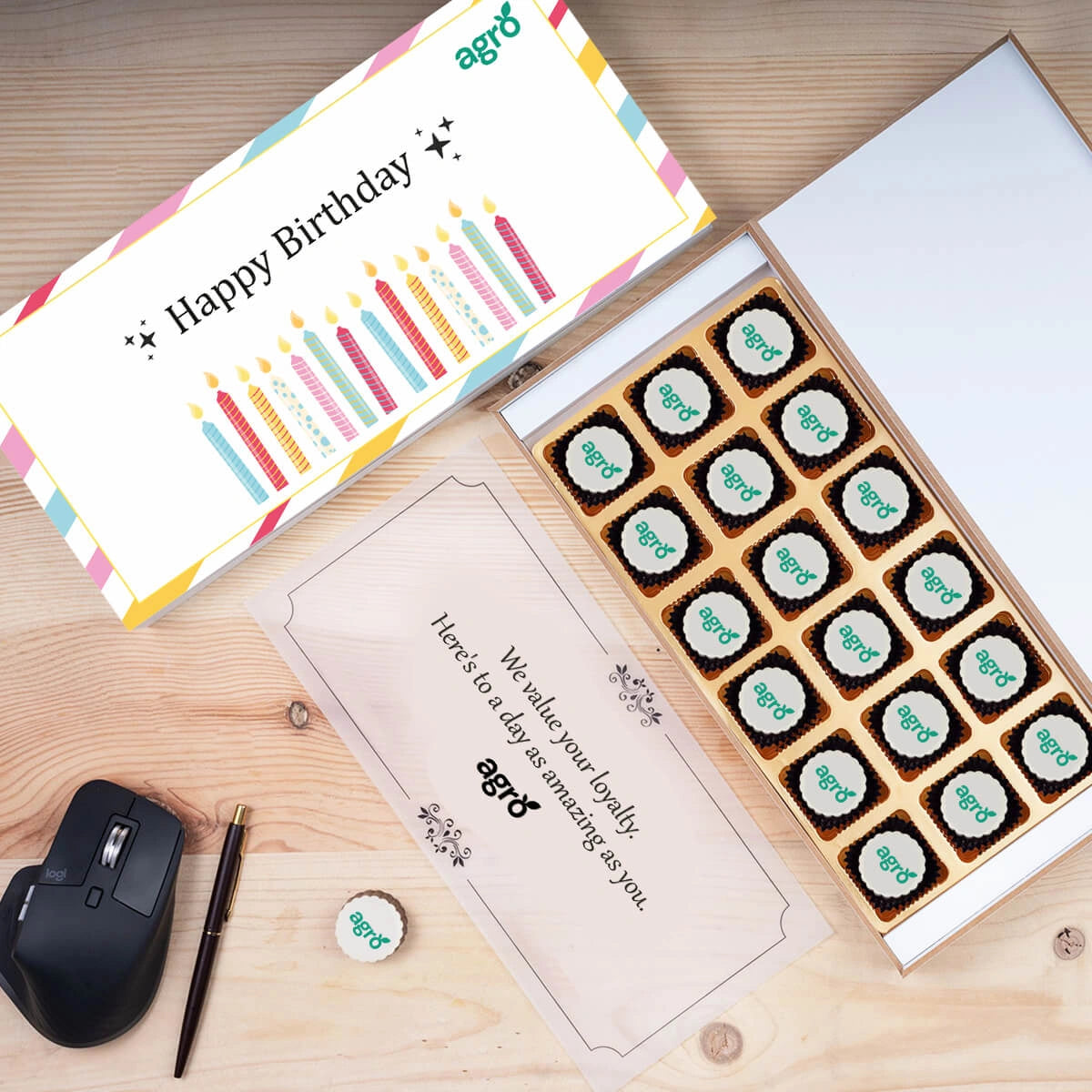
18 Piece Premium Client Gift Box
A compact yet elegant chocolate box designed for exclusive corporate gifting.
See CollectionKey Information
| Aspect | Birthday Gifting Impact | Business Outcome |
|---|---|---|
| Emotional connection | Creates positive, memorable brand moments | Higher loyalty and recall |
| Personalization | Makes customers feel individually valued | Stronger engagement |
| Retention strategy | Non-sales relationship touchpoint | Reduced churn |
| ROI measurement | Tracked via retention, engagement, CLV | Compounding long-term ROI |
| Scalability | Enabled through CRM and automation | Consistent customer experience |
Frequently Asked Questions
1. Does customer birthday gifting really improve retention?
Yes, birthday gifting improves retention by strengthening emotional connection rather than pushing a transaction. Customers who feel remembered and valued are less likely to disengage. Even a small uplift in retention driven by birthday gifting can deliver outsized returns when measured over the full customer lifecycle.
2. How do companies measure birthday gifting ROI?
Birthday gifting ROI is usually measured through retention lift, post-birthday engagement, reactivation rates, and long-term customer lifetime value. Instead of looking for immediate sales, brands track how customer behavior improves over weeks and months after receiving a birthday gift.
3. Are birthday gifts more effective than birthday discounts?
In most cases, yes. Discounts create short-term spikes but are quickly forgotten. Birthday gifts, especially personalized physical gifts, create lasting memory and goodwill. Emotional value tends to outperform monetary value when the goal is long-term loyalty rather than quick conversion.
4. What kind of birthday gifts do customers remember most?
Customers remember gifts that feel personal and thoughtful rather than expensive. Personalized items, meaningful messages, and well-presented packaging leave stronger impressions than generic vouchers or mass-produced merchandise, even if the monetary value is lower.
5. Is birthday gifting suitable for B2B customers as well?
Absolutely. In B2B relationships, birthdays humanize the brand and strengthen professional relationships. A thoughtful birthday gift can cut through formal communication and reinforce trust, especially in long sales cycles or high-value account relationships.
6. How expensive does a birthday gifting program need to be?
A birthday gifting program does not need to be expensive to be effective. The focus should be on relevance and personalization rather than cost. Even modestly priced gifts can deliver strong ROI when they are thoughtful, well-timed, and consistently executed.
7. Should birthday gifting be automated or manual?
The most effective approach combines both. Automation ensures no birthdays are missed, while personalization keeps the experience human. CRM-based automation allows brands to scale birthday gifting without losing authenticity or emotional impact.
8. Can birthday gifting help reactivate inactive customers?
Yes, birthday gifting is particularly effective for reactivating dormant customers. Because it is non-promotional, it feels safe and warm rather than pushy, making it easier to restart conversations that traditional reactivation campaigns often fail to revive.
9. How far in advance should birthday gifts be sent?
Birthday gifts perform best when they arrive on or just before the actual birthday. This timing maximizes surprise and emotional impact, reinforcing the feeling that the brand remembered the moment rather than reacting late or sending a generic follow-up.
10. Is birthday gifting a one-time campaign or an ongoing strategy?
Birthday gifting delivers the strongest results when treated as an ongoing strategy. Consistency builds expectation, trust, and familiarity over time. Brands that systemize birthday gifting see compounding benefits rather than isolated engagement spikes.
