

How a Small Post-Purchase Gift Can Create a Big Brand Impact After Checkout
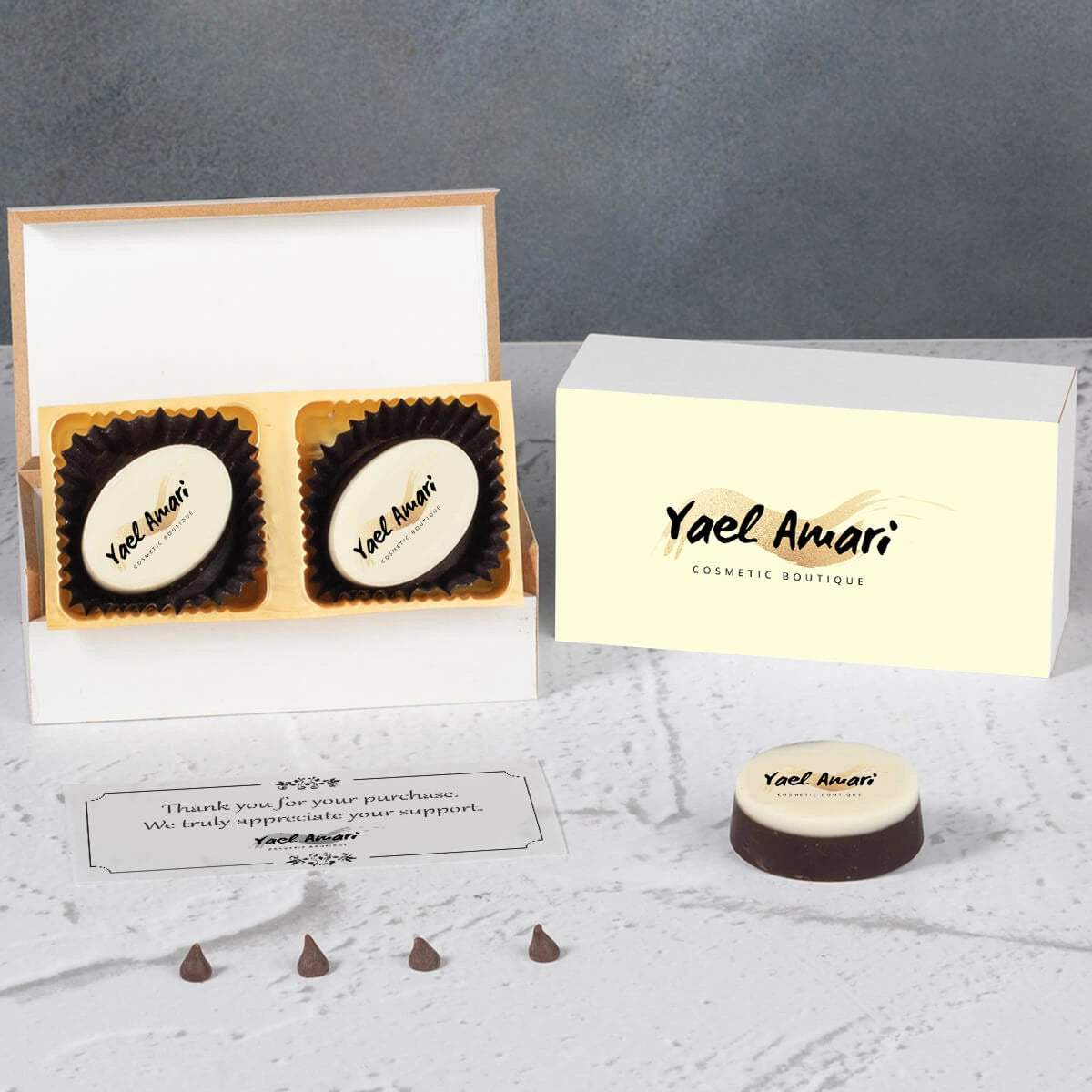
How a Small Post-Purchase Gift Can Create a Big Brand Impact After Checkout
Explore Thank You GiftsKey Takeaways
-
Post-purchase is the most underutilised brand moment. A small gift after checkout creates emotional impact when customer expectations are lowest.
-
Gifts outperform discounts for loyalty. Thoughtful post-purchase gift ideas build memory, trust, and repeat intent more effectively than price cuts.
-
Personalisation multiplies peered with or immediately after an order feel sincere, not promotional.
-
Post-purchase gifting builds long-term ROI. The real payoff shows up in retention, referrals, reviews, and brand recall—not just immediate sales.
The checkout is not the end of a customer journey—it is often the emotional peak. What happens immediately after payment can quietly determine whether a customer forgets your brand or comes back again. Yet, for many businesses, this moment is treated as a handover point rather than a relationship-building opportunity.
Most brands invest heavily in acquisition, promotions, and advertising, but overlook a powerful moment hiding in plain sight: the post-purchase experience. This is the phase where expectations are low, emotions are neutral, and even a small surprise can feel unexpectedly meaningful.
A thoughtfully chosen post-purchase gift—especially one that arrives without warning—can transform a routine transaction into a memorable brand interaction. This is why leading brands are increasingly investing in post-purchase gift ideas instead of deeper discounts or louder remarketing campaigns.
For businesses exploring corporate giveaway gifts for customers—particularly after exhibitions, online purchases, or bulk orders—this approach delivers something rare: emotional return on investment. Unlike discounts, which disappear the moment they are redeemed, a gift creates a memory.
Premium yet compact gestures, such as personalised chocolates or a simple thank-you note, often outperform coupons in driving repeat purchases. This is why many brands today are rethinking their after-checkout strategy and adopting curated gifting solutions like thank you for your purchase gifts as a deliberate retention lever rather than a promotional afterthought.
Build a gifting experience—combine logo chocolates with festive hampers for maximum impact. Read more →
Why the Post-Purchase Moment Matters More Than Ever
Customers today are surrounded by choice. Pricing differences are minimal, delivery timelines are similar, and product features are often comparable. In this environment, what truly differentiates one brand from another is not what happens before checkout, but how customers are treated after the sale.
Extensive research shows that retaining existing customers is significantly more profitable than acquiring new ones. According to Harvard Business Review’s research on customer retention, even a modest increase in retention can lead to a substantial rise in profitability over time.
The reason is straightforward: trust compounds. When customers feel appreciated after checkout—without being asked to buy more—the gesture feels genuine. This is why small thank-you gifts for customers consistently outperform transactional incentives in building long-term loyalty.
In ecommerce, D2C, and B2B environments, this moment becomes even more important. Customers have already committed their money and trust. A post-purchase gift reassures them that they made the right choice and that the brand values the relationship beyond the transaction.
This perspective is echoed in Bain & Company’s insights on retention-led growth, which highlight how long-term customer relationships generate far more value than one-time purchases driven by price incentives.
Premium Corporate Gifts with Logo Chocolates
Make a lasting impression on clients and employees with personalized chocolate gift boxes that reflect your brand.
Explore NowThe Opportunity: Turning Transactions Into Relationships
Many brands ask a practical question: will a small post-purchase gift really make a difference? A more revealing question is what happens when brands do nothing at all after checkout.
Silence after payment feels transactional and forgettable. Appreciation feels human and memorable.
A small, well-timed gift triggers the principle of reciprocity, a well-documented psychological effect where people feel naturally inclined to respond positively to acts of generosity. According to MIT Sloan Management Review’s analysis of customer experience psychology, emotional cues strongly influence recall, satisfaction, and future behavior.
This is why thoughtful post-purchase gifting can lead to measurable outcomes such as:
- Higher repeat purchase intent
- Stronger brand recall weeks or months later
- Organic word-of-mouth recommendations
- Lower buyer’s remorse after checkout
Importantly, the impact of a gift has little to do with its size or cost. A premium chocolate with a brand logo, a personalised message, or elegant packaging can feel far more valuable than its actual monetary worth.
This principle is particularly relevant for corporate giveaway gifts, where perception of quality often matters more than quantity. Many brands therefore explore structured gifting programs through solutions such as corporate gifts for customers that help maintain consistency, branding, and presentation.
Focus on gifts that strengthen engagement: personalized chocolates boost brand recall and retention. Read more →
Core Pillars of High-Impact Post-Purchase Gifting
Surprise consistently outperforms discounts. Discounts are expected and easily forgotten, while gifts create emotional contrast. According to Shopify’s customer retention research, experiential value plays a far stronger role in loyalty than price-based incentives.
Personalisation dramatically increases perceived value. A generic freebie is forgettable, but a personalised gift feels intentional. Adding a name, logo, or short message can elevate even a modest item into a premium brand touchpoint. This aligns closely with McKinsey’s findings on personalization, which show that customers associate personalisation with higher brand credibility.
Packaging is not an afterthought. The way a gift is presented shapes how it is perceived. Elegant, well-designed packaging signals care and quality, enhances the unboxing experience, and increases the likelihood of sharing. This aspect is explored further in packaging ideas for thank-you gifts.
Timing defines impact. Post-purchase gifts are most effective when they arrive with the order or immediately afterward. Delayed gifts often feel promotional, while timely gestures feel thoughtful and sincere.
Together, these pillars explain why brands that invest in post-purchase gifting are not merely adding a cost, but strengthening the emotional foundation of their customer relationships.
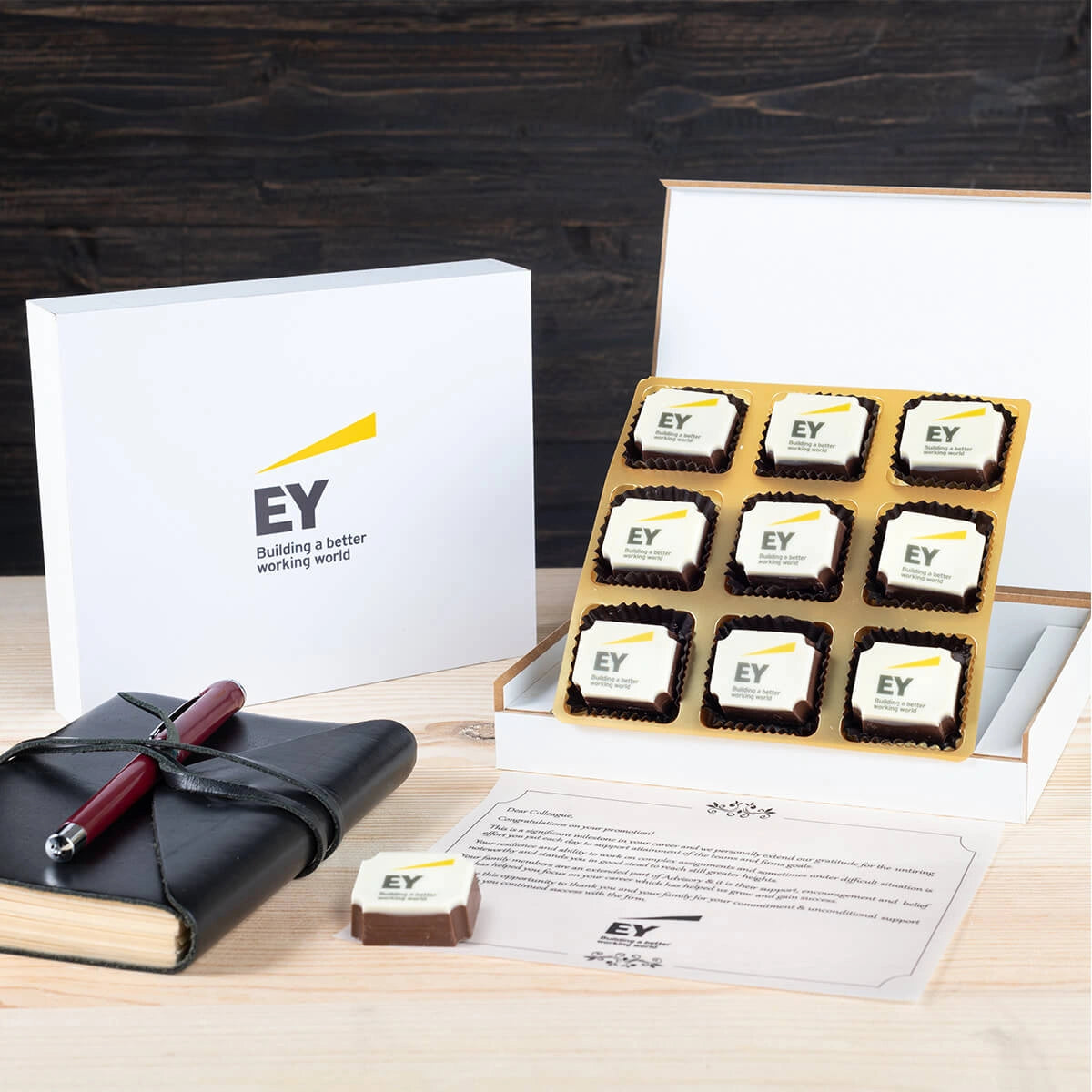
9 Logo Chocolates Box
An impressive assortment of nine custom logo chocolates for premium gifting.
Explore OptionsData, Research, and Real-World Use Cases
The idea that a small post-purchase gift can influence customer loyalty is not theoretical. It is supported by data, behavioral research, and the real-world practices of brands that prioritize long-term relationships over short-term conversions.
According to Bain & Company’s research on customer retention, loyal customers tend to spend more over time, require lower servicing costs, and are more likely to recommend brands to others. Even small improvements in retention rates can result in disproportionate increases in overall profitability.
However, beyond financial metrics, the true value of post-purchase gifting lies in emotional recall. Research discussed by MIT Sloan Management Review explains that emotionally charged experiences, especially unexpected ones, are stored more vividly in memory than rational interactions such as discounts or promotional emails.
This explains why brands that include a thoughtful gift after checkout often enjoy stronger brand recall weeks or even months later. In many cases, customers may forget the exact price they paid, but they remember how the brand made them feel.
In exhibition and corporate order scenarios, this effect becomes even more pronounced. When procurement teams interact with multiple vendors offering similar products and pricing, post-purchase gestures help brands stand out beyond the initial transaction. Insights shared through post-purchase gifting customer reviews show that thoughtful follow-up gifts often lead to higher response rates, smoother reorders, and stronger long-term relationships.
This is also why many brands incorporate surprise elements into their post-purchase strategy, as discussed in surprise thank-you gifts and brand experience. These gestures extend the brand interaction beyond the point of sale.
A Practical Framework for Effective Post-Purchase Gift Ideas
Designing impactful post-purchase gift ideas does not require large budgets or complex logistics. It requires clarity of intent and consistency in execution.
Step one is defining the purpose of the gift. Brands must decide whether the goal is to welcome first-time buyers, nurture repeat customers, or reinforce relationships with corporate clients. Each audience responds differently to post-purchase gestures, and the gifting strategy should reflect this distinction.
This is particularly relevant when planning thank-you gifts for first-time buyers, where emotional reassurance and brand warmth play a critical role in reducing buyer hesitation and encouraging a second purchase.
Step two is keeping the gift small, thoughtful, and aligned with the brand. Effective post-purchase gifts are easy to include with shipments, subtle in branding, and consistent with the brand’s positioning. Overly promotional items often feel transactional and fail to create emotional impact.
Many brands prefer premium edible gifts because they feel indulgent without being excessive. Structured options such as four-chocolate printed gift boxes or six-chocolate printed gift boxes allow for personalization while maintaining logistical simplicity.
Step three is adding a human message. A brief thank-you note or printed message significantly enhances sincerity. Customers can easily distinguish between automated promotions and genuine appreciation. The role of messaging in post-purchase gifting is explored further in custom thank-you messages with gifts.
Step four is tracking the right outcomes. Post-purchase gifting does not always deliver immediate sales spikes. Instead, brands should monitor indicators such as repeat purchase rates, customer reviews mentioning surprise or appreciation, and referral-driven inquiries.
Compare vendors by product range, customization, logistics, and feedback before choosing. Read more →
Post-Purchase Gifting in Corporate and Event Contexts
For brands participating in exhibitions, expos, and promotional events, post-purchase gifting offers a powerful way to extend engagement beyond the event floor. While many brands rely solely on brochures or follow-up emails, a physical gift creates a tangible reminder of the interaction.
Corporate buyers, in particular, tend to value polish and consistency. This is why structured gifting solutions under corporate gifting programs are increasingly used as part of post-event follow-ups and relationship-building efforts.
Unlike one-time giveaways at stalls, post-purchase gifts arrive after the decision has already been made. This timing reinforces trust rather than attempting to influence it, which makes the gesture feel more authentic.
Brands that integrate post-purchase gifting into their event strategy often report improved re-engagement and smoother conversations during subsequent sales cycles.
Trends Shaping the Future of Post-Purchase Gifting
Post-purchase gifting is steadily evolving from a discretionary expense into a strategic retention tool. Customers increasingly expect brands to deliver thoughtful, human experiences even after the transaction is complete.
According to McKinsey’s research on personalization, customers are more likely to stay loyal to brands that demonstrate understanding and relevance through personalized interactions.
Several trends are shaping how brands approach post-purchase gifting:
- Personalisation at scale through names, messages, and subtle branding
- Premium minimalism that prioritizes quality over quantity
- Sustainable and reusable packaging choices
- Experience-led gifting focused on emotional impact
In India, where gifting is deeply embedded in business and social culture, these trends align naturally with customer expectations. Chocolate-based gifting, in particular, continues to grow because it balances emotional appeal with universal acceptance.
Conclusion
The most impactful brand moments often occur after checkout, when customers are no longer expecting anything. A small, thoughtful post-purchase gift can quietly strengthen loyalty, increase repeat purchases, and improve long-term brand recall.
For businesses investing in corporate giveaway gifts for customers, post-purchase gifting is not about extravagance. It is about intention, timing, and consistency. When done well, it transforms a transaction into a relationship.
Brands that recognize the power of post-purchase moments do more than close sales. They build trust, emotional connection, and lasting customer value. Further insights on this approach can be found in small thank-you gifts with big impact, the psychology behind thank-you gifting, and best practices for thank-you gifting in ecommerce.

4 Piece Premium Client Gift Box
A compact yet elegant chocolate box designed for exclusive corporate gifting.
See CollectionKey Information
| Aspect | Insight | Why It Matters |
|---|---|---|
| Post-purchase moment | Emotional peak after checkout | Ideal time to surprise and delight customers |
| Gift size vs impact | Small gifts create big recall | Perceived value > actual cost |
| Personalisation | Names, messages, branding | Increases emotional connection |
| Discounts vs gifts | Gifts build memory | Discounts are forgotten quickly |
| Best timing | With order or immediately after | Feels thoughtful, not sales-driven |
| Ideal use cases | Ecommerce, exhibitions, corporate orders | Strengthens long-term relationships |
| ROI measurement | Retention, reviews, referrals | More accurate than short-term conversions |
FAQs
1. What is a good post-purchase gift for customers?
A good post-purchase gift is small, thoughtful, and aligned with your brand. Items like personalised chocolates, thank-you notes, or premium packaging work well because they feel intentional without being excessive. The goal is to create emotional impact, not add cost.
2. Do small gifts really improve customer loyalty?
Yes, small gifts can significantly improve loyalty because they trigger emotional reciprocity. Customers may forget discounts, but they remember how a brand made them feel. A surprise gift after checkout strengthens trust and increases the likelihood of repeat purchases.
3. Are post-purchase gifts better than discount coupons?
In many cases, yes. Discounts reduce margins and are expected, while gifts create a memorable experience. Post-purchase gifts build long-term brand recall and loyalty, whereas coupons mainly drive short-term transactional behaviour.
4. When should a post-purchase gift be given?
The most effective time is with the order or immediately after checkout. Gifts given later often feel promotional. Timely post-purchase gifting feels sincere and reinforces the customer’s decision right after payment.
5. What are budget-friendly post-purchase gift ideas?
Budget-friendly options include personalised thank-you notes, branded chocolates, small keepsakes, or upgraded packaging. Personalisation increases perceived value, allowing brands to create impact without significantly increasing spend.
6. Do post-purchase gifts work for corporate and B2B customers?
Absolutely. Corporate buyers value polish and appreciation. Post-purchase gifts help brands stand out after exhibitions, bulk orders, or corporate transactions and often lead to smoother reorders and stronger long-term relationships.
7. How do post-purchase gifts affect brand recall?
Post-purchase gifts create emotional moments, which are remembered longer than transactional interactions. Customers may forget pricing details but recall the surprise and thoughtfulness, strengthening brand memory over time.
8. Should every customer receive a post-purchase gift?
Not necessarily. Brands can segment gifting for first-time buyers, high-value customers, or corporate clients. Strategic gifting ensures impact without unnecessary cost and aligns gifts with customer lifetime value.
9. How can brands measure the ROI of post-purchase gifting?
ROI should be measured through repeat purchases, customer reviews, referrals, and retention rates rather than immediate sales. These indicators better reflect the long-term value created by post-purchase gifting.
10. Is post-purchase gifting scalable for growing brands?
Yes, when designed thoughtfully. Standardised gift formats with light personalisation are easy to scale. Many brands integrate post-purchase gifting into fulfilment workflows, making it a sustainable part of customer experience strategy.
