

Post-Purchase Gifting: The Silent Strategy Behind Better Customer Reviews
Post-Purchase Gifting: The Silent Strategy Behind Better Customer Reviews
Explore Thank You GiftsKey Takeaways
- Post-purchase gifting influences customer reviews through emotional reciprocity rather than incentives.
- Thoughtful thank you gifts lead to higher-quality, more detailed, and more authentic customer reviews.
- Personalisation and presentation significantly amplify the perceived value of post-purchase gifts.
- Gifting delivers stronger long-term ROI than discounts by building loyalty and brand advocacy.
- For exhibitions and corporate campaigns, post-purchase gifting extends engagement beyond the event.
Most brands chase customer reviews the same way—automated emails, push notifications, and discount reminders that sound suspiciously like spam. Yet the brands receiving the most heartfelt, detailed reviews often aren’t asking louder. They’re giving smarter.
Post-purchase gifting flips the traditional review-generation model on its head. Instead of asking customers to leave feedback, it creates an emotional moment that makes customers want to talk about their experience.
A thoughtfully timed thank you gift—especially one that feels personal—activates something powerful: reciprocity. Customers don’t feel nudged; they feel acknowledged. And acknowledged customers write better reviews.
This is why leading B2B and D2C brands increasingly invest in post-purchase gifting as part of their customer experience strategy. Whether it’s a premium chocolate box, a personalised message, or a surprise add-on, the gift becomes the moment customers remember—and review.
Brands using curated gifting solutions like thank you gifts for your purchase are discovering that reviews aren’t driven by reminders, but by meaningful moments.
Build a gifting experience—combine logo chocolates with festive hampers for maximum impact. Read more →
Why Reviews Are Harder Than Ever
Customers today are overwhelmed with requests for feedback. After every transaction, they receive surveys, star ratings, and reminder emails asking for “just one minute.”
The result? Review fatigue.
While reviews remain one of the most powerful trust signals for buyers, the traditional methods of collecting them are losing effectiveness—especially in premium and B2B segments.
Research from Harvard Business Review highlights that emotional engagement—not incentives—is the strongest predictor of voluntary customer advocacy. When customers feel emotionally invested, they respond organically.
This insight explains why discounts and cashback offers often lead to short, generic reviews, incentive-driven feedback, and low emotional depth.
In contrast, experiential gestures—like post-purchase gifting—create memory anchors. Customers don’t remember the follow-up email, but they remember how a brand made them feel after the sale was complete.
For Indian customers in particular, gifting carries cultural significance. Gratitude expressed through a tangible, thoughtful gift signals respect and long-term intent—two values deeply embedded in business relationships.
Premium Corporate Gifts with Logo Chocolates
Make a lasting impression on clients and employees with personalized chocolate gift boxes that reflect your brand.
Explore NowThe Core Opportunity: From Transactional Buyers to Vocal Advocates
The real opportunity with post-purchase gifting isn’t reviews alone—it’s review quality.
A customer who receives a surprise thank you gift is more likely to mention the brand story, share photos or unboxing moments, describe emotions rather than features, and recommend the brand to peers.
This happens because the gift reframes the relationship. The transaction feels complete, yet the brand continues the conversation.
According to McKinsey Quarterly , emotionally connected customers are significantly more valuable over time, exhibiting higher repeat purchases and stronger advocacy behaviors.
Here’s where gifting becomes strategic.
A well-timed gift acts as a non-verbal thank you, signals brand maturity and confidence, differentiates you in a crowded market, and reduces reliance on discounts.
Brands that use premium, customised gifting—such as personalised chocolates with logos, names, or messages—add a layer of memorability that generic freebies can’t replicate.
This is why curated solutions from corporate gifts for customers are often used not just for festivals, but as ongoing post-purchase touchpoints.
Focus on gifts that strengthen engagement: personalized chocolates boost brand recall and retention. Read more →
Key Concepts: The 4 Pillars of Review-Driven Post-Purchase Gifting
1. Reciprocity, Not Incentives
Behavioral psychology shows that people respond more positively to gestures than to requests. A gift feels like appreciation, while a discount feels like a transaction.
This aligns with insights from MIT Sloan Management Review , which explains why reciprocity triggers voluntary actions—like reviews—without explicit asks.
2. Timing Is Everything
The most effective post-purchase gifts arrive after delivery confirmation, during the peak satisfaction moment, and before review reminder emails.
This sequencing ensures the gift becomes associated with the product experience—not the marketing funnel.
3. Personalisation Multiplies Impact
A generic gift is pleasant. A personalised gift is memorable.
Adding the customer’s name, a brand message, or occasion relevance turns a simple gesture into a story customers want to share.
You can see how personalised messaging enhances emotional impact in custom thank you messages with gifts .
4. Presentation Signals Brand Value
Packaging plays a silent but critical role. Premium boxes, clean design, and thoughtful unboxing elevate perceived value—often beyond the cost of the gift itself.
This is why brands investing in elegant packaging consistently receive photo-rich reviews and social mentions.
For ideas, explore packaging ideas for thank you gifts .
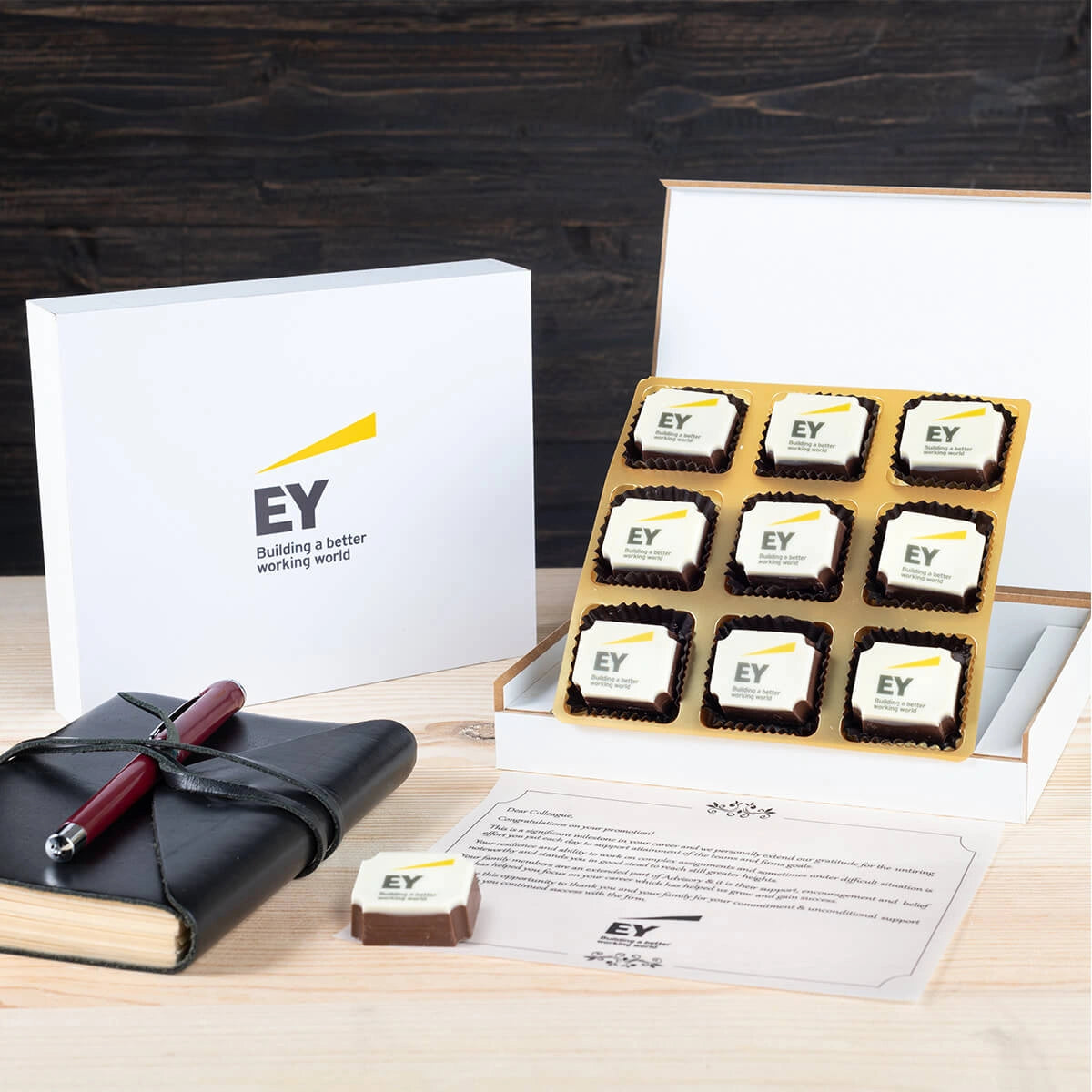
9 Logo Chocolates Box
An impressive assortment of nine custom logo chocolates for premium gifting.
Explore OptionsData, Research & Real-World Signals
Shopify’s research on post-purchase experience shows that customers are more likely to engage with brands after delivery than immediately at checkout. This window is often underutilized.
Similarly, Forbes has highlighted that experiential loyalty—created through moments of delight—drives stronger brand advocacy than price-based strategies.
In real-world gifting campaigns, customers who receive a surprise gift are more likely to leave unsolicited reviews. These reviews tend to mention service experience, care, and brand personality.
Brands using thoughtful gifting strategies also report higher engagement when review requests follow after the gift—not before.
Practical How-To: Building a Review-Driven Post-Purchase Gifting System
The biggest myth about post-purchase gifting is that it’s expensive or difficult to scale. In reality, brands that get the best results treat gifting as a system, not a one-off gesture.
Here’s a simple, repeatable framework:
Step 1: Define the “Review Moment”
Instead of asking for reviews immediately after delivery, identify when your customer is most likely to feel satisfied. This could be two to five days after receiving the product, after successful onboarding or first usage, or after a completed event, exhibition, or campaign.
This is when a gift lands with maximum emotional impact.
Step 2: Choose the Right Gift Tier
Not every customer needs the same gift. Smart brands segment their gifting strategy based on order value, customer type such as first-time versus repeat buyers, B2B versus D2C customers, and strategic or high-value accounts.
Premium customers can receive more personalised, keepsake-style gifts, while others may receive compact yet thoughtful tokens.
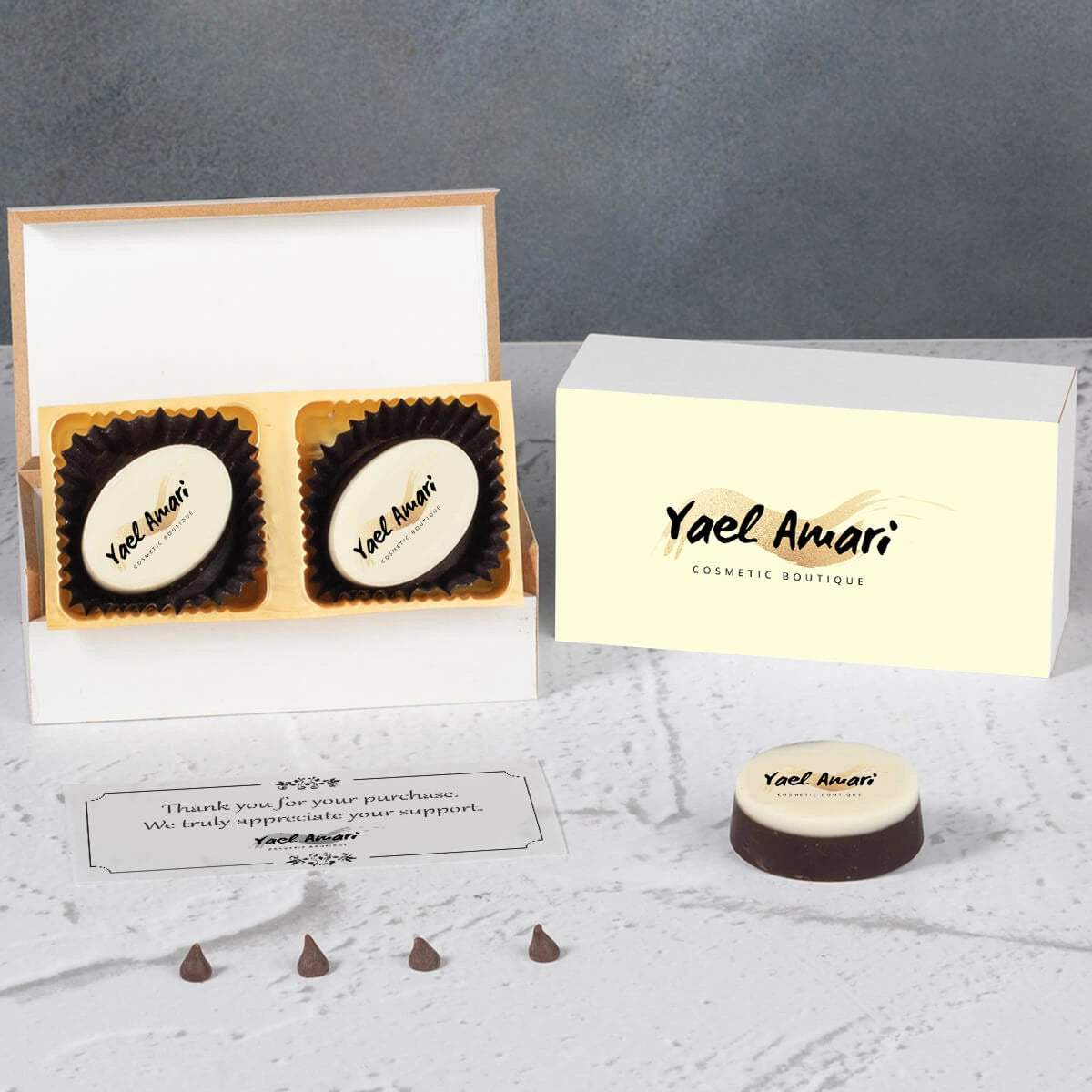
Many brands rely on modular gifting formats like printed chocolate boxes in two-piece, four-piece, six-piece, or twelve-piece options to control costs while maintaining brand consistency. Examples include 2 chocolate box corporate gifts and 6 chocolate box corporate gifts .
Step 3: Personalise Without Overcomplicating
You don’t need complex CRM workflows to personalise effectively. Even small touches like adding the customer’s name, a brand message, or purchase-specific gratitude dramatically increase emotional value.
This principle is explored in depth in the psychology behind thank you gifts .
Compare vendors by product range, customization, logistics, and feedback before choosing. Read more →
Cost vs ROI: Why Gifting Beats Discounts for Reviews
One of the most common objections decision-makers raise is cost. But comparing gifting to discounts often leads to the wrong conclusion.
Discounts reduce margin immediately, train customers to wait for incentives, and attract transactional reviews that lack emotional depth.
Gifting, on the other hand, creates emotional recall, builds brand equity, and drives organic advocacy.
Insights shared by McKinsey Quarterly show that emotionally loyal customers are less price-sensitive and more likely to recommend brands even without incentives.
When brands compare a two-hundred to three-hundred rupee discount against a thoughtfully designed gift in the same price range, the gift consistently delivers higher perceived value, longer memory retention, and stronger word-of-mouth impact.
This shift away from discounts is discussed further in budget-friendly thank you gifts for customers .
Using Post-Purchase Gifting in Exhibitions, Expos, and Corporate Campaigns
For exhibition and event-focused businesses, post-purchase gifting plays a strategic role beyond booth giveaways.
Instead of distributing generic swag at the event, high-performing brands capture qualified leads, nurture conversations after the event, and follow up with post-meeting or post-purchase thank you gifts.
This second touchpoint occurs when the event noise has faded, making the brand more memorable.
Corporate buyers often explore structured solutions through corporate gifts and corporate gifts for customers to extend exhibition ROI.
The review impact is indirect but powerful. Clients mention service quality in testimonials, procurement teams remember thoughtful follow-ups, and decision-makers associate the brand with professionalism and reliability.
Real-World Patterns: What Successful Brands Do Differently
Brands that consistently generate high-quality reviews through gifting share a few common patterns.
They do not ask for reviews immediately. The gift always arrives before the review request.
Their messaging sounds human rather than scripted. Messages focus on gratitude instead of calls to action.
This approach is illustrated well in small thank you gifts with big impact .
They also invest in packaging because presentation drives shareability, review photos, and brand recall.
Most importantly, they treat gifting as a long-term relationship investment rather than a short-term marketing expense.
Trends and Expert Insight: The Future of Post-Purchase Gifting
Experts increasingly agree that post-purchase experience is the next major differentiator in competitive markets.
Publications such as Harvard Business Review and MIT Sloan Management Review highlight that brands win loyalty through emotional connection rather than aggressive incentives.
Emerging trends include personalised physical gifts replacing digital-only thank you messages, CRM-integrated gifting workflows, premium consumables outperforming generic merchandise, and conversational review requests instead of automated reminders.
In India, where gifting is culturally ingrained, this approach feels authentic rather than forced, making it especially effective.

4 Piece Premium Client Gift Box
A compact yet elegant chocolate box designed for exclusive corporate gifting.
See CollectionConclusion
Post-purchase gifting works because it respects the customer. It expresses gratitude without asking for anything in return.
When executed thoughtfully, a thank you gift creates emotional recall, encourages authentic reviews, strengthens brand perception, and builds long-term loyalty.
For brands seeking a smarter alternative to discount-driven review collection, post-purchase gifting offers a sustainable and human approach.
Explore curated gifting formats designed for post-purchase moments at thank you for your purchase gifts , and turn everyday transactions into memorable brand experiences.
Key Information
| Aspect | Without Post-Purchase Gifting | With Post-Purchase Gifting |
|---|---|---|
| Customer Reviews | Low response rate, short and generic feedback | Higher response rate with detailed, emotional reviews |
| Customer Perception | Transactional relationship | Emotionally connected and appreciated |
| Brand Recall | Limited to product experience | Extended through memorable gifting moment |
| Cost Efficiency | Ongoing discount dependency | Higher perceived value with controlled gifting cost |
| Long-Term ROI | Short-term conversions | Repeat purchases, referrals, and advocacy |
FAQs
1. Do thank you gifts really help in getting more customer reviews?
Yes, thank you gifts significantly increase the likelihood of customer reviews because they trigger emotional reciprocity. When customers receive an unexpected, thoughtful gift after purchase, they feel appreciated rather than marketed to. This emotional response naturally motivates them to share positive feedback without feeling pressured.
2. What kind of thank you gifts work best for encouraging reviews?
Gifts that feel personal and premium work best. Customised items like personalised chocolates, handwritten notes, or well-designed keepsake boxes create a memorable experience. Consumable gifts are especially effective because they are enjoyed immediately and often mentioned positively in customer reviews.
3. Is post-purchase gifting better than offering discounts for reviews?
In most cases, yes. Discounts attract transactional behavior and short reviews, while post-purchase gifting builds emotional connection. Gifts enhance brand perception, improve review quality, and support long-term loyalty. Unlike discounts, gifts do not condition customers to wait for price reductions.
4. When is the right time to send a post-purchase thank you gift?
The best time is shortly after the product is delivered or used—typically two to five days later. This is when customer satisfaction is highest. Sending the gift before requesting a review ensures the positive emotion is associated with the brand experience, not with a marketing prompt.
5. Can post-purchase gifting work for B2B and corporate customers?
Absolutely. In B2B and corporate settings, gifting reinforces professionalism and relationship value. Post-purchase thank you gifts help decision-makers remember your brand positively, influence testimonials, and strengthen long-term partnerships, especially after exhibitions, events, or large procurement orders.
6. Is post-purchase gifting expensive to implement at scale?
Not necessarily. Gifting can be tiered based on customer value, order size, or strategic importance. Modular gift formats allow brands to control costs while maintaining consistency. When compared to repeated discounts, gifting often delivers higher perceived value at similar or even lower budgets.
7. How does personalisation affect customer reviews?
Personalisation dramatically increases impact. Adding a customer’s name, a relevant message, or a brand-specific note makes the gift feel intentional. Customers are more likely to mention personalised gestures in reviews, which improves authenticity, emotional depth, and trust for future buyers reading those reviews.
8. Can post-purchase gifting help after exhibitions or trade shows?
Yes, it is especially effective post-exhibitions. Sending a thank you gift after meetings or deal closures helps brands stand out once event noise fades. This follow-up gesture improves recall, strengthens relationships, and often influences testimonials or reviews related to service quality and experience.
9. Should brands ask for reviews along with the thank you gift?
It’s better to separate the two. The gift should arrive without asking for anything in return. A review request can follow later. This sequence ensures the gift feels genuine, not transactional, and results in more authentic, voluntary, and positive customer reviews.
10. How does post-purchase gifting support long-term brand loyalty?
Post-purchase gifting transforms a one-time transaction into a relationship moment. Customers remember brands that express gratitude beyond the sale. This emotional connection leads to repeat purchases, stronger advocacy, better reviews, and higher lifetime value compared to purely price-driven strategies.
