

How to Track Results from Trade Show Gifts (And Prove ROI Beyond the Booth)
How to Track Results from Trade Show Gifts (And Prove ROI Beyond the Booth)
Explore Corporate Gifting
Key Takeaways
-
Trade show gifts generate ROI when tracked beyond booth-level metrics
-
Measuring engagement and recall is more valuable than chasing instant conversions
-
Gifts should be designed with tracking and follow-up in mind
-
Personalisation and relevance outperform generic giveaways
-
Post-expo measurement is where true ROI becomes visible
Every exhibition ends the same way for most brands. The booth comes down, giveaway boxes are empty, the team is exhausted, and a familiar question hangs in the air: “Did this actually work?”
Trade show gifts are often treated as a necessary expense rather than a measurable growth lever. Boxes of pens, notebooks, mugs, or generic swag are handed out generously. Business cards are exchanged. Leads are scanned. And then everyone moves on—without ever connecting those gifts to real business outcomes.
But here’s the truth most marketers don’t want to admit: trade show gifts are not the problem. Poor tracking is.
When designed and measured correctly, giveaway gifts can drive post-expo engagement, qualified leads, brand recall, and even direct revenue. The key lies in knowing what to track, when to track it, and how to connect offline gifting with online behaviour.
Brands that treat gifting as part of a structured event funnel—rather than a one-day activity—consistently outperform those that don’t. This is especially relevant for companies investing in premium corporate gifts for customers as a way to build relationships, not just booth traffic.
In this guide, we’ll break down exactly how to track results from trade show gifts using practical frameworks, real-world examples, and methods that work within the Indian exhibition ecosystem.
Select an agency that offers full customization, mockup previews, and reliable delivery. Read more →
Why Trade Show Gift ROI Is So Hard to Measure
Unlike digital campaigns, exhibitions don’t come with dashboards or instant attribution. There is no click-through rate, no conversion pixel, and no single moment where success becomes obvious. This lack of immediate data often leads marketers to assume that trade show giveaways are inherently untrackable.
But the challenge isn’t the medium—it’s the mindset.
Trade shows are multi-touch journeys, not single interactions. A prospect may receive a gift at the booth, glance at it later in the hotel room, scan something days after returning to the office, and finally convert weeks or months later when a relevant need arises.
Research published by Harvard Business Review on experiential marketing shows that physical brand experiences create stronger emotional memory than purely digital touchpoints. This explains why a well-designed physical gift can influence decisions long after the event ends.
In India, this effect is even more pronounced. B2B buying decisions are relationship-driven, and factors like recall, trust, and perceived effort often matter as much as pricing or feature comparisons.
Yet most brands stop measuring at surface-level metrics such as booth footfall or the number of gifts distributed. These numbers look good in post-event reports but fail to answer the most important question: Did the gift influence what happened next?
Premium Corporate Gifts with Logo Chocolates
Make a lasting impression on clients and employees with personalized chocolate gift boxes that reflect your brand.
Explore NowThe Core Problem: Gifts Without Attribution
The biggest mistake brands make is treating trade show gifts as cost centres instead of attribution tools.
Consider a common scenario. You distribute 1,000 gifts at an industry exhibition. Three months later, the sales team closes several new accounts from the same sector or region. When leadership asks whether the exhibition contributed, the answer is usually vague: “It probably helped.”
According to insights from McKinsey Quarterly’s research on marketing ROI, companies that actively measure attribution across multiple touchpoints make significantly better budget decisions than those that rely on assumptions or gut feeling.
The issue is not that gifts fail to perform. The issue is that most giveaways are designed without any built-in mechanism to trace their impact.
Compare an untracked giveaway—generic, impersonal, and disposable—with a thoughtfully designed, personalised gift that encourages interaction. The latter naturally invites engagement and recall, a principle explored in personalized gifts for corporate trade fairs.
Attribution begins with intent. If a gift is meant to drive business outcomes, it must leave a measurable trail.
Understanding the Opportunity Hidden in Trade Show Gifting
Trade show gifts are uniquely positioned within the buyer journey. They sit at the intersection of brand experience, relationship-building, and follow-up engagement.
Unlike digital ads that disappear with a scroll, physical gifts stay with the recipient. They occupy desk space, office drawers, or shared team areas. This repeated exposure reinforces memory in subtle but powerful ways.
This is why consumable and personalised items—such as customised chocolates—often outperform generic utility items. The experience of receiving and sharing the gift becomes part of the brand story, as discussed in chocolates versus pens as giveaway options.
When brands recognise this opportunity, the goal of gifting shifts from “giving something away” to “starting a measurable conversation.”
A Practical Framework to Track Trade Show Gift ROI
To track trade show gift ROI effectively, it helps to think in layers rather than a single number. A layered approach captures both immediate and long-term impact.
1. Distribution Metrics: What Went Out
This is the foundation. Track how many gifts were distributed, which gift formats were used, and which audience segments received them. Even basic categorisation—such as prospects versus existing customers—adds valuable context later.
2. Engagement Metrics: What Happened Next
Engagement shows whether the gift prompted action. This can include QR code scans, visits to a landing page, WhatsApp messages, or email replies. Research from Statista’s trade show marketing insights indicates that physical touchpoints often trigger delayed digital engagement rather than instant responses.
3. Attribution Metrics: Business Impact
Attribution connects engagement to outcomes. This includes leads generated, meetings scheduled, opportunities created, and deals influenced. Perfect attribution is not required—directional insight is enough to guide smarter decisions.
4. Brand Recall Metrics: Long-Term Value
Not all ROI shows up immediately. Indicators such as increased brand searches, recognition during sales calls, or repeat engagement at future events reflect the long-term value of gifting.
This framework transforms trade show gifts from a line item expense into a source of actionable insight.
When gifting is designed with tracking in mind and evaluated across these layers, ROI becomes visible, defendable, and repeatable.
Premium Corporate Gift Box
Stylish and elegant chocolate boxes crafted to leave a lasting impression on your clients.
Explore NowData, Research, and Real-World Evidence: What Actually Proves ROI
One of the biggest reasons trade show gifting budgets are frequently questioned is because the impact feels indirect. Unlike paid ads or email campaigns, giveaways rarely show an immediate spike in conversions. However, when brands look beyond instant results, the data tells a very different story.
Research published by Harvard Business Review on experiential marketing demonstrates that tangible brand experiences create stronger emotional connections and longer-lasting recall than digital-only interactions. This means a physical gift received at an exhibition can continue influencing perception well after the booth is dismantled.
Similarly, insights from Statista’s trade show and event marketing research show that exhibitions remain one of the highest-intent B2B channels, particularly when engagement is tracked over weeks rather than days.
In real-world terms, brands that distribute personalised, experience-driven gifts often see higher-quality follow-up interactions. Prospects who receive thoughtful giveaways tend to open emails more frequently, respond faster to outreach, and recall the brand more clearly during sales conversations.
This aligns with observations shared in Forbes’ analysis on why brand recall matters, which highlights how memorability directly influences long-term revenue, especially in B2B decision-making cycles.
The conclusion is simple: trade show gifts do work, but their value becomes visible only when brands track influence rather than expecting immediate transactions.
Focus on gifts that strengthen engagement: personalized chocolates boost brand recall and retention. Read more →
A Step-by-Step Playbook to Track Trade Show Gift ROI
Turning trade show gifting into a measurable system does not require complex technology. It requires clarity, consistency, and intent. Below is a practical playbook that can be applied to almost any exhibition or industry.
Step 1: Design Gifts With Tracking in Mind
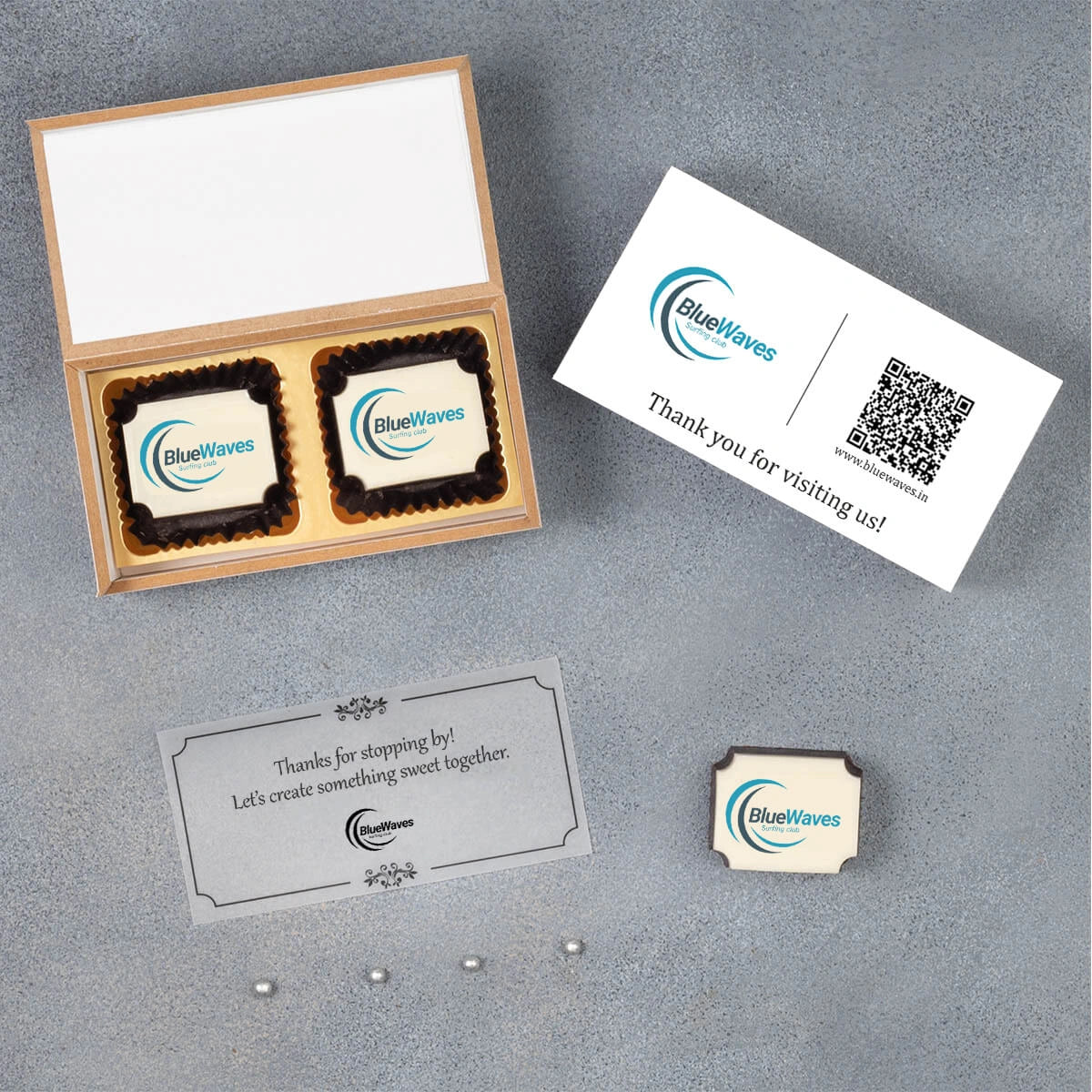
Tracking begins before the event, not after it. Gifts should be designed to invite interaction rather than passive consumption. This can be achieved through QR codes, message cards, or subtle calls to action that feel helpful rather than promotional.
When the design of a giveaway aligns with brand identity and messaging, it becomes easier for recipients to remember and respond. This principle is explored further in designing giveaway gifts that reflect your brand.
Step 2: Segment Gift Distribution Intentionally
Not every recipient should be treated the same. Separating gifts for prospects, existing customers, channel partners, and high-value leads allows you to evaluate which segments generate the strongest post-event engagement.
Even simple tagging within a CRM or spreadsheet can reveal patterns that would otherwise go unnoticed.
Step 3: Connect Offline Gifts to Digital Touchpoints
Offline experiences often trigger online behaviour later. Research from Shopify’s offline-to-online marketing insights shows that physical touchpoints frequently influence digital actions days or weeks after the initial interaction.
This delayed engagement is exactly why trade show gifts must be connected to measurable digital destinations.
Step 4: Track Engagement Beyond the Event Dates
One of the most common mistakes brands make is stopping measurement too early. Engagement from trade show gifts often peaks after the event, not during it.
Monitoring activity for 30 to 60 days post-expo provides a more accurate picture of how gifts influence follow-up conversations, meeting requests, and sales momentum. Practical strategies for this phase are outlined in using giveaways to boost post-expo sales.
Step 5: Review Results in Layers, Not a Single Metric
Rather than asking whether gifting delivered ROI, ask which gift formats, messages, and audiences performed best. This layered review transforms data into insight and insight into strategy.
Trends Shaping the Future of Trackable Trade Show Gifting
Trade show gifting is evolving rapidly. Brands are moving away from mass distribution and towards fewer, more meaningful interactions.
Key trends include higher personalisation, smaller but more thoughtful quantities, and greater integration with CRM and follow-up systems. These shifts reflect a broader move towards quality over volume in B2B marketing.
According to insights shared in McKinsey’s perspective on marketing effectiveness, organisations that connect offline and online data sources consistently outperform those that treat them as separate silos.
In the Indian exhibition landscape, where relationships and trust play a central role, this approach is especially effective. A well-timed, well-designed gift can reinforce credibility far more powerfully than repeated follow-up emails.
Why Smart Gifting Outperforms Generic Giveaways
Generic giveaways aim to maximise reach, but smart gifting aims to maximise relevance. When a gift feels considered rather than transactional, recipients are more likely to engage meaningfully.
This is why experience-driven formats such as personalised chocolate boxes often outperform utility items. The act of opening, sharing, or consuming the gift creates a micro-experience that reinforces brand presence.
These dynamics are explored further in chocolate branding strategies for trade shows and the importance of giveaways for trade show success.
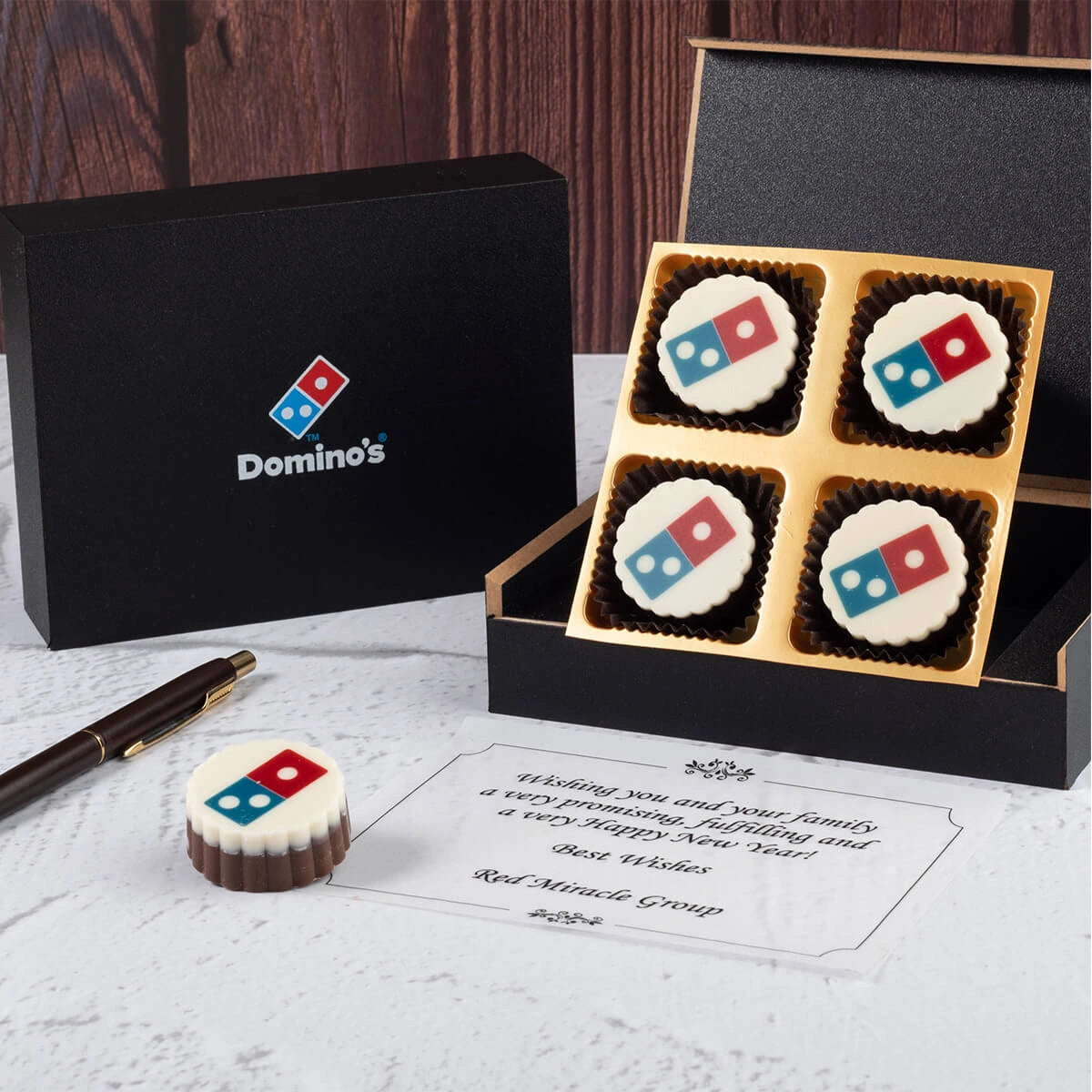
4 Piece Premium Client Gift Box
A compact yet elegant chocolate box designed for exclusive corporate gifting.
See CollectionConclusion: Turning Trade Show Gifts into Measurable Growth Assets
Trade show gifts do not fail. What fails is the assumption that their impact must be immediate to be valuable.
When brands design giveaways with tracking in mind, measure engagement beyond the event, and evaluate performance across multiple layers, gifting becomes a strategic growth tool rather than a sunk cost.
The goal is not to justify gifting after the fact, but to learn from every interaction and refine future exhibitions accordingly.
For brands planning upcoming exhibitions and seeking gifting solutions that balance memorability with measurability, exploring thoughtfully designed corporate gifting solutions can be a strong starting point.
Because the true ROI of trade show gifts is not what you give away at the booth, but what those gifts continue to deliver long after the event ends.
Build a gifting experience—combine logo chocolates with festive hampers for maximum impact. Read more →
Key Information
| Aspect | What to Track | Why It Matters |
|---|---|---|
| Gift Distribution | Quantity, type, audience segment | Creates a baseline for performance analysis |
| Engagement Signals | QR scans, replies, website visits | Shows whether gifts triggered action |
| Lead Quality | Meetings booked, sales conversations | Indicates business relevance, not just interest |
| Attribution | Deals influenced, pipeline impact | Connects gifting to revenue outcomes |
| Brand Recall | Repeat enquiries, recognition later | Captures long-term value of gifting |
| Post-Expo Timeline | 30–60 day engagement window | Prevents underestimating gift impact |
Frequently Asked Questions (FAQs)
1) How do you actually track the ROI of trade show giveaway gifts?
Tracking trade show gift ROI means looking beyond booth footfall. You track distribution, post-expo engagement (QR scans, follow-ups), lead quality, and sales influence over time. The goal isn’t instant conversion, but understanding how gifts contribute to recall, conversations, and eventual revenue.
2) Are trade show gifts really worth the cost for B2B brands?
Yes—when measured correctly. Gifts create physical brand experiences that stay with prospects longer than ads. When paired with tracking elements like QR codes or follow-ups, they often drive better recall, faster responses, and stronger post-expo engagement than untracked swag.
3) What metrics matter most after a trade show ends?
Post-expo metrics include email replies, meeting requests, QR scans, website visits, and sales conversations referencing the event. These indicators show whether the gift triggered action after the expo, which is where most real ROI is generated.
4) How long should brands track results from trade show gifts?
Ideally, track results for at least 30–60 days after the event. Many prospects engage days or weeks later. Stopping measurement too early often leads brands to underestimate the true impact of their giveaway strategy.
5) Can personalised gifts really improve trade show ROI?
Yes. Personalised gifts feel intentional, not promotional. They increase the likelihood of interaction and recall, making recipients more responsive to follow-ups. Customisation also makes it easier to associate engagement and leads back to the event.
6) What’s the biggest mistake companies make with trade show giveaways?
The biggest mistake is giving gifts without any tracking mechanism. When giveaways lack a next step—like a QR code or follow-up message—brands lose the ability to connect the gift to engagement, leads, or sales outcomes.
7) How do QR codes help in tracking trade show gift performance?
QR codes bridge offline and online interactions. When scanned, they show who engaged, when, and how often. This data helps brands measure interest levels and connect gifts to digital behaviour without adding friction for the recipient.
8) Should every visitor at the booth receive the same gift?
Not necessarily. Segmenting gifts based on audience type—prospects, customers, partners—helps track which group responds best. This insight allows brands to optimise gift value and strategy for future exhibitions.
9) Is brand recall really a measurable outcome?
Yes. Brand recall can be observed through repeat enquiries, direct brand searches, mentions during sales calls, and recognition at future events. While indirect, these signals strongly influence long-term ROI and buying decisions.
10) How can trade show gifts support post-expo sales efforts?
Gifts act as conversation starters after the event. When sales teams reference the giveaway in follow-ups, it improves response rates and context. This continuity turns a one-day interaction into an ongoing sales dialogue.
