

How to Design a Giveaway Gift That Truly Reflects Your Brand (Plus Smart Ideas That Work)
How to Design a Giveaway Gift That Truly Reflects Your Brand (Plus Smart Ideas That Work)
Explore Corporate Gifting
Key Takeaways
-
Brand aligned giveaways are strategic brand touchpoints, not just promotional items.
-
Perceived value, relevance, and experience matter more than the actual cost of the gift.
-
Personalization and thoughtful design significantly improve recall and engagement.
-
Giveaways should align with audience context and stage in the sales funnel.
-
When designed intentionally, giveaways can support long-term brand trust and conversions.
Walk through any exhibition hall or corporate networking event, and you’ll notice the same familiar scene. Tables stacked with pens, notebooks, stress balls, tote bags, and keychains — all neatly printed with logos, all handed out generously, and all forgotten just as quickly. Most giveaway gifts today are designed to be distributed, not remembered. That is where many brands unknowingly lose one of their most powerful marketing opportunities.
A giveaway gift is often the first tangible interaction a prospect or customer has with your brand. Long after the event banners are taken down, sales pitches are forgotten, and brochures are discarded, the right giveaway continues to communicate — quietly reinforcing who you are, what you stand for, and how much thought you put into relationships. This is exactly why brand aligned giveaways outperform generic freebies in recall, trust, and long-term brand impact.
For companies investing in exhibitions, trade shows, customer events, and promotional campaigns, giveaways are not merely a cost line item. They are physical brand touchpoints with real ROI potential. When designed strategically, they can spark conversations at the booth, strengthen emotional connection, and even influence post-event follow-ups and conversions.
Brands that approach corporate gifting thoughtfully — choosing items that align with their brand identity, audience expectations, and positioning — consistently stand out in crowded environments. Whether you are planning outreach for new prospects, customer engagement initiatives, or large-scale event promotions, understanding how to design a giveaway gift that reflects your brand is no longer optional. It has become a competitive necessity.
This is where premium and thoughtfully designed corporate gifts for customers play a critical role in shaping first impressions and long-term brand perception.
Select an agency that offers full customization, mockup previews, and reliable delivery. Read more →
Why Brand Alignment in Giveaways Is Non-Negotiable
Corporate giveaways have traditionally been treated as promotional merchandise — items created primarily to increase brand visibility through repeated exposure. The assumption was simple: put your logo on something useful, distribute it widely, and brand recall will follow. While this approach may have worked in the past, buyer expectations have evolved significantly.
Today’s customers and business decision-makers are more experience-driven, value-conscious, and selective. They are less impressed by generic branding and far more responsive to authenticity, relevance, and quality. Research on promotional merchandise highlights that tangible branded items are most effective when they deliver relevance, perceived value, and emotional engagement — not just logo exposure ( promotional merchandise explained on Wikipedia ).
In the B2B and corporate context, giveaway gifts serve several strategic functions beyond simple visibility:
- Reinforcing brand positioning and professionalism
- Creating memorability in crowded exhibition environments
- Signaling quality, credibility, and trustworthiness
- Supporting early-stage relationship building
Despite this, many organizations still approach giveaways as bulk procurement exercises. Decisions are driven by unit cost, speed of delivery, or ease of sourcing rather than alignment with brand values or audience expectations. The outcome is predictable — gifts that add noise instead of meaning, and visibility without impact.
A premium brand distributing low-quality plastic items sends conflicting signals. A sustainability-focused company handing out non-recyclable products undermines its own messaging. Even well-funded brands risk diluting their identity when their giveaways fail to reflect their positioning.
In contrast, when giveaways are designed intentionally — with attention to brand tone, target audience, and usage context — they become an extension of the brand story rather than a disconnected promotional tactic. This shift is particularly important at exhibitions and trade shows, where attention spans are limited and differentiation is difficult.
Premium Corporate Gifts with Logo Chocolates
Make a lasting impression on clients and employees with personalized chocolate gift boxes that reflect your brand.
Explore NowThe Core Problem (and Opportunity): Most Giveaways Are Brand-Blind
The most common mistake companies make with giveaway gifts is not choosing the wrong product. It is skipping strategy altogether. When giveaways are treated as afterthoughts, they fail to communicate anything meaningful about the brand.
Most ineffective giveaways fail for three clear reasons.
1. They Prioritize Cost Over Brand Meaning
Budget constraints are real, but prioritizing the cheapest possible item often leads to forgettable experiences. Research consistently shows that perceived value matters far more than actual cost when it comes to brand recall and emotional impact ( research on giveaway ideas and brand awareness by Indeed ).
A low-cost item that feels thoughtful and well-designed can outperform a more expensive item that feels generic. This is where many brands misjudge effectiveness.
2. They Focus on Logos, Not Identity
A logo alone does not communicate brand values. Without context, design, or storytelling, it becomes visual noise. When giveaways rely solely on logo placement, they miss the opportunity to express personality, positioning, or intent.
Brand identity is communicated through materials, packaging, messaging, and experience — not just through brand marks.
3. They Ignore the End User
A giveaway that does not align with the recipient’s lifestyle, preferences, or environment rarely survives beyond the event day. Items that feel inconvenient, irrelevant, or low-value are quickly discarded, taking your brand message with them.
The opportunity lies in reframing giveaways as brand experiences rather than promotional merchandise. When done right, they become conversation starters, memory anchors, and subtle brand ambassadors that continue to work long after the event ends.
Focus on gifts that strengthen engagement: personalized chocolates boost brand recall and retention. Read more →
The Framework: Key Pillars of Brand-Aligned Giveaways
Pillar 1: Brand Identity First, Product Second
Before selecting any giveaway item, brands must start with clarity. What does your brand represent? Are you positioned as premium, innovative, relationship-driven, playful, or purpose-led? What emotions should your brand evoke when someone interacts with it?
Your giveaway should function as a physical expression of these answers. A premium brand should avoid flimsy materials. A relationship-focused brand should invest in personalization. A design-led brand should pay close attention to aesthetics and presentation.
This is why experiential giveaway items often outperform generic merchandise. Customized chocolates presented in elegant packaging, for example, communicate care, craftsmanship, and attention to detail. They feel intentional rather than transactional.
Brands like ChocoCraft apply this principle by designing giveaways that go beyond surface-level branding. Custom-printed chocolates, thoughtful messaging, and keepsake-style boxes allow the gift itself to reflect brand intent instead of relying solely on logos.
The impact of this approach is explored further in personalized gifts for corporate trade fairs .
Pillar 2: Audience Relevance Over Universal Appeal
A common misconception in corporate gifting is that giveaways should appeal to everyone. In reality, the most effective giveaways resonate deeply with a clearly defined audience segment.
Key questions brands should ask include:
- Who exactly is receiving this gift?
- What context will they receive it in?
- How will they interact with it after the event?
At exhibitions, for example, quick-consumption items with premium appeal often outperform long-term utility items that require ongoing commitment. Industry insights on exhibition strategies confirm that relevance and immediacy significantly improve engagement ( exhibition giveaway strategy insights from Regent Gifts ).
Choosing relevance over reach ensures that your giveaway is not just taken, but remembered — and that your brand leaves a positive impression long after the event concludes.
Pillar 3: Design, Personalisation, and Sensory Experience
Once brand identity and audience relevance are clearly defined, design becomes the most powerful differentiator. This is the stage where a giveaway transitions from being “branded merchandise” to a memorable brand experience.
Design in giveaway gifting extends far beyond visual appearance. It includes packaging, messaging, texture, weight, ease of use, and even the moment of receiving or unboxing. Each of these elements contributes to how the recipient perceives your brand.
Marketing research consistently shows that multi-sensory experiences significantly improve brand recall, particularly in crowded environments like exhibitions and trade shows ( research on giveaway impact from Indeed ).
For example, a well-designed box creates anticipation before the product is even seen. Personalised messages make the recipient pause and engage. Edible gifts create instant emotional connection through taste and indulgence. Together, these elements transform a simple giveaway into a meaningful interaction.
This is where customised consumables such as branded chocolates stand out. A chocolate printed with your logo, message, or visual identity becomes more than a treat. It becomes a branded moment. When paired with elegant packaging and thoughtful presentation, it reinforces values like quality, care, and attention to detail.
Brands often extend messaging subtly using inner-lid notes, butter-paper messages, or small inserts that guide the recipient toward a next step. These techniques are explored in detail in butter paper messages in chocolate giveaways .
Pillar 4: Perceived Value Always Beats Actual Cost
One of the most important principles in corporate gifting is that perceived value matters far more than the actual cost of the item. A thoughtfully designed gift that feels premium can outperform a more expensive gift that feels generic or impersonal.
Research on promotional merchandise confirms that recipients associate higher quality giveaways with stronger brand credibility and professionalism ( insights on promotional merchandise ).
Perceived value is influenced by several factors:
- Packaging quality and presentation
- Level of personalisation
- Relevance to the recipient
- Ease of consumption or use
- Alignment with brand positioning
This is why many brands are moving away from bulk low-cost giveaways and instead choosing fewer, more meaningful gifts. Premium chocolates, for instance, are often consumed immediately, appreciated universally, and shared with others, extending brand reach organically.
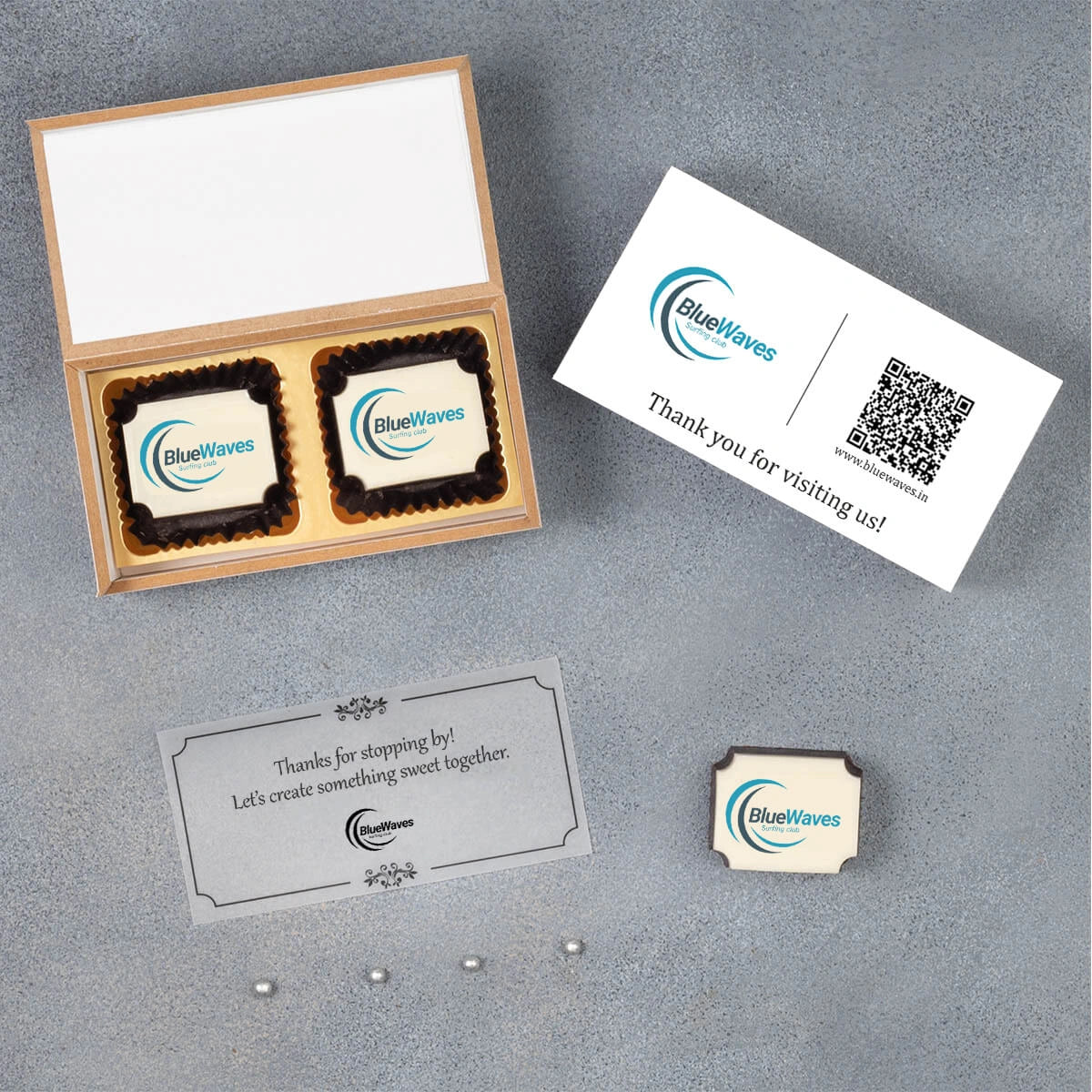
Brands can also scale perceived value by choosing different formats for different audiences. Compact options such as 2 chocolate box corporate gifts work well for high-volume distribution, while larger formats like 6 chocolate box corporate gifts or premium festive assortments can be reserved for priority prospects or key clients.
Premium Corporate Gift Box
Stylish and elegant chocolate boxes crafted to leave a lasting impression on your clients.
Explore Now
Data, Research, and Real-World Insight: What Actually Works
Multiple studies across marketing and business publications show that tangible brand experiences outperform digital-only touchpoints in recall, emotional impact, and trust. Physical giveaways remain in a recipient’s environment longer and create repeated brand exposure ( research on corporate giveaways from Promogear ).
In exhibition settings, the most effective giveaway strategies align gifts with the recipient’s stage in the sales funnel. Awareness-stage visitors respond best to quick, engaging experiences, while warmer leads value personalisation and perceived exclusivity.
Festive gifting also plays a strong role in relationship-building. In markets like India, where gifting carries cultural and emotional significance, formats such as corporate Diwali gifts often generate stronger goodwill and recall than generic year-round giveaways.
At ChocoCraft, brands frequently use printed chocolate giveaways as conversation starters rather than standalone gifts. The giveaway supports booth engagement, follow-up conversations, and post-event communication instead of replacing them.
Practical How-To: Designing a Brand-Aligned Giveaway Step by Step
Designing an effective giveaway does not require guesswork. It requires a structured approach.
Step 1: Define the Brand Signal
Decide what your giveaway should communicate. Is your brand premium, innovative, warm, or relationship-driven? The giveaway should reinforce this signal clearly and consistently.
Step 2: Map the Gift to Audience and Context
Different audiences require different experiences. Exhibition visitors need lightweight, engaging gifts. High-value prospects appreciate personalisation. Existing customers respond well to celebratory or festive formats.
Guidance on aligning gifts with specific industries can be found in choosing giveaway gifts based on industry .
Step 3: Design the Experience
Focus on clarity and elegance. Avoid cluttered branding. Ensure packaging, messaging, and presentation feel cohesive and intentional.
Step 4: Add a Soft Call-to-Action
Subtle calls-to-action such as QR codes, inner messages, or follow-up prompts help bridge offline engagement with online interaction. This approach is explained further in how to track results from trade show gifts .
Step 5: Measure and Refine
Track booth engagement, follow-up responses, and brand recall during sales conversations. Over time, this data helps refine gifting strategy and improve ROI.
Trends and Expert Insight: The Future of Brand-Aligned Gifting
Corporate giveaways are steadily shifting from volume-driven distribution to experience-driven design. Brands are prioritising personalisation, premium consumables, sustainable packaging, and fewer but higher-value touchpoints.
Industry analysis highlights that brands focusing on meaningful moments rather than mass impressions build stronger trust and recall ( insights on promotional value from Branded Corporate Gift ).
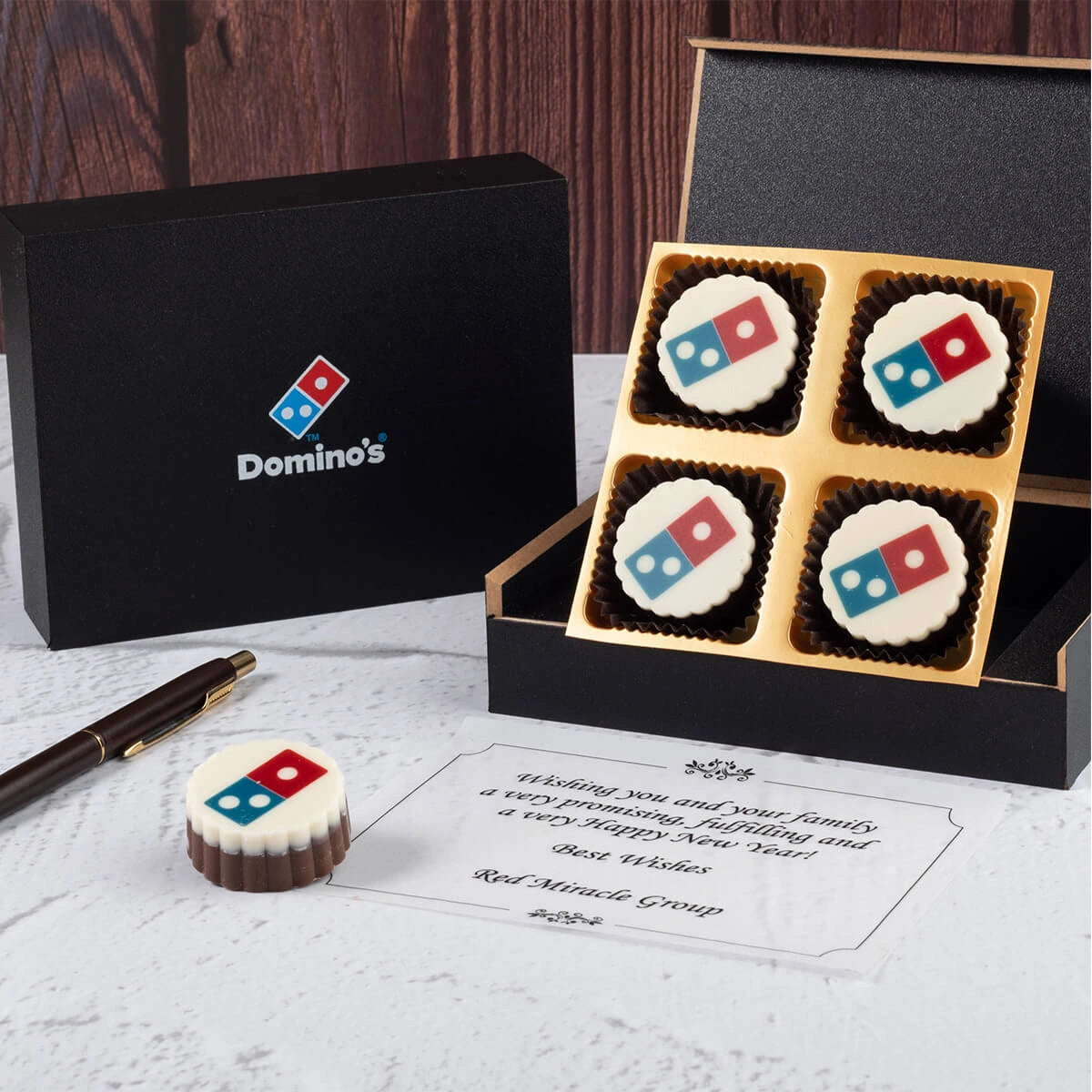
4 Piece Premium Client Gift Box
A compact yet elegant chocolate box designed for exclusive corporate gifting.
See CollectionConclusion
Designing a giveaway gift that reflects your brand is not about trends or templates. It is about intentional alignment between identity, audience relevance, and perceived value. When giveaways are treated as strategic brand assets rather than leftover merchandise, they strengthen trust, improve recall, and support long-term conversions.
Explore thoughtfully designed corporate gifts that help your brand leave a lasting impression long after the event ends.
Build a gifting experience—combine logo chocolates with festive hampers for maximum impact. Read more →
Key Information
| Aspect | What It Means | Why It Matters |
|---|---|---|
| Brand Alignment | Matching the giveaway’s design, quality, and message with brand identity | Ensures consistent brand perception and credibility |
| Audience Relevance | Designing gifts for a specific target audience | Increases engagement and reduces wastage |
| Perceived Value | How premium and thoughtful the gift feels | Drives recall more than actual cost |
| Personalization | Custom names, messages, or event references | Creates emotional connection and memorability |
| Sensory Experience | Visual, tactile, or taste-based engagement | Improves brand recall in crowded events |
| Strategic CTA | Subtle prompts like QR codes or messages | Supports post-event follow-ups and conversions |
| Quality & Packaging | Materials, finish, and presentation | Signals professionalism and trustworthiness |
Frequently Asked Questions (FAQs)
1. What does it really mean to design a giveaway gift that reflects your brand?
Designing a brand-reflective giveaway means aligning the gift’s look, quality, messaging, and experience with your brand’s identity and values. It’s not just about adding a logo—it’s about ensuring the gift communicates who you are, what you stand for, and how you want customers to feel when they interact with your brand.
2. Why are brand aligned giveaways more effective than generic freebies?
Brand aligned giveaways create stronger recall because they feel intentional and meaningful. Generic freebies are easily forgotten, while thoughtfully designed gifts reinforce brand positioning, improve perceived value, and build emotional connection. This makes them far more effective in competitive environments like exhibitions and trade shows.
3. How do I choose the right giveaway gift for an exhibition or trade show?
Start by understanding your audience and the event context. Exhibition giveaways should be easy to carry, instantly engaging, and relevant. Focus on perceived value rather than cost, and choose items that spark conversation and reflect your brand’s personality rather than trying to appeal to everyone.
4. Is personalization really that important in corporate giveaway gifts?
Yes, personalization significantly increases engagement and memorability. Adding names, messages, or event-specific details makes the recipient feel valued rather than marketed to. Personalized giveaways signal effort and care, which strengthens trust and improves the likelihood that your brand will be remembered after the event.
5. How much should a company spend on brand aligned giveaways?
There’s no fixed number. What matters more than budget is perceived value. A thoughtfully designed, well-packaged, lower-cost item can outperform an expensive but generic gift. Brands should focus on quality, relevance, and experience rather than maximizing quantity or choosing the cheapest option.
6. What types of giveaway gifts work best for customer retention?
Gifts that create a positive emotional experience work best for retention. Consumables, premium items, and personalized gifts often perform well because they’re enjoyed immediately and associated with delight. When customers feel appreciated rather than sold to, they’re more likely to remember and engage with your brand again.
7. How can giveaway gifts support post-event sales or follow-ups?
Giveaways can act as bridges between offline and online engagement. Including subtle call-to-actions, QR codes, or inner messages encourages recipients to revisit your brand after the event. When designed well, the gift becomes a reminder that nudges prospects toward follow-up conversations or conversions.
8. Are edible giveaways like chocolates effective for B2B branding?
Yes, edible giveaways are highly effective when executed well. They create instant sensory engagement, are universally appreciated, and encourage sharing. When paired with premium packaging and thoughtful branding, edible gifts feel indulgent and memorable rather than promotional, making them ideal for B2B environments.
9. What mistakes should brands avoid when designing giveaway gifts?
Common mistakes include prioritizing cost over quality, relying solely on logos, ignoring audience context, and choosing items with no practical or emotional value. These mistakes can dilute brand perception and waste marketing spend. A lack of strategy is often more damaging than choosing the wrong product.
10. How can I measure whether my giveaway strategy is actually working?
Effectiveness can be measured through booth engagement, follow-up response rates, brand recall during sales conversations, and post-event inquiries. Tracking how recipients interact with your brand after receiving the giveaway provides insights into whether the gift supported awareness, engagement, or conversion goals.
